
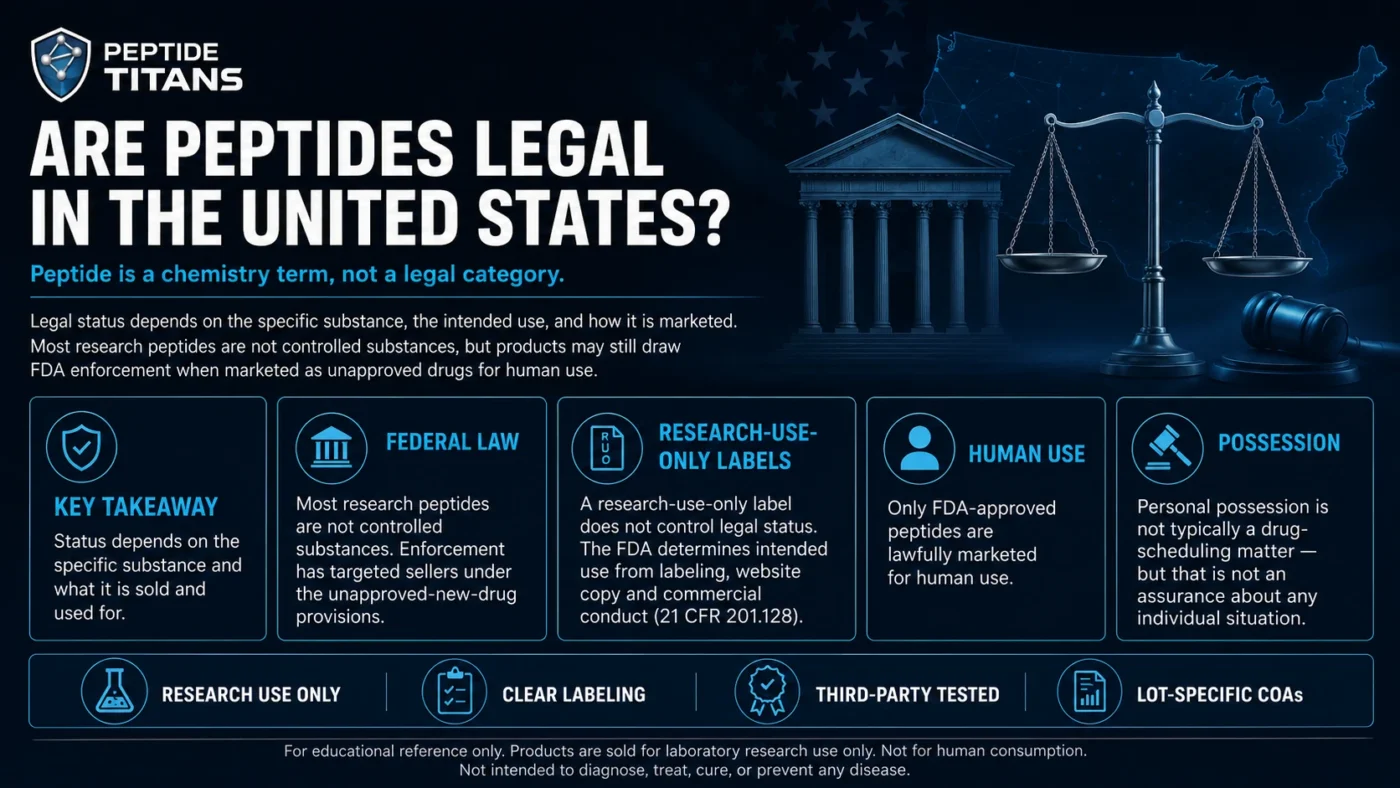
Are Peptides Legal in the United States?
Peptide is not a legal category. What US law actually says, what the July 2026 FDA advisory committee vote changed, and why a research-use-only label is
Educational, research-only overviews of peptides, blends, testing methods, and how to read the scientific literature. For laboratory and research use only.
Peptide is not a legal category. What US law actually says, what the July 2026 FDA advisory committee vote changed, and why a research-use-only label is
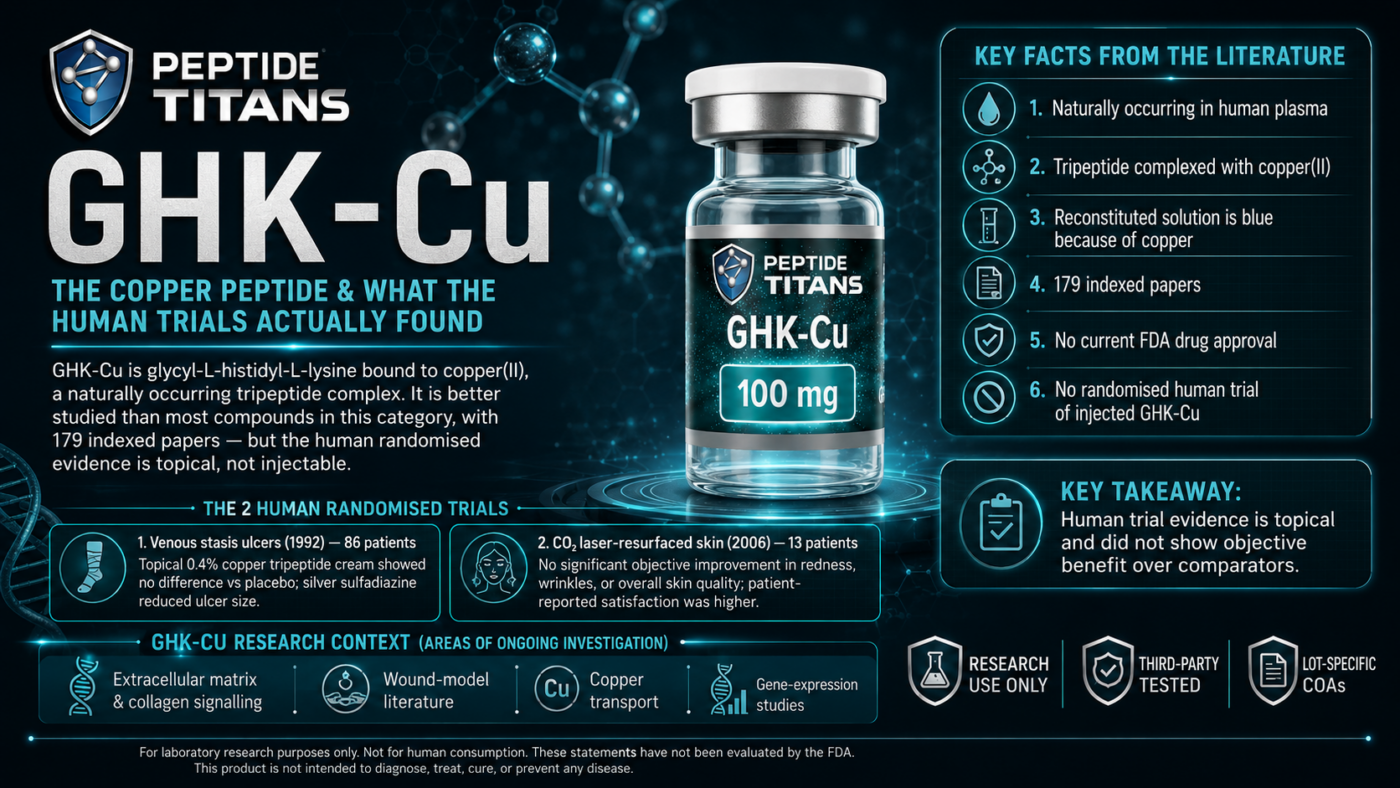
GHK-Cu has 179 published papers and, unusually, randomised human trials. Both were topical, and neither showed an objective benefit.
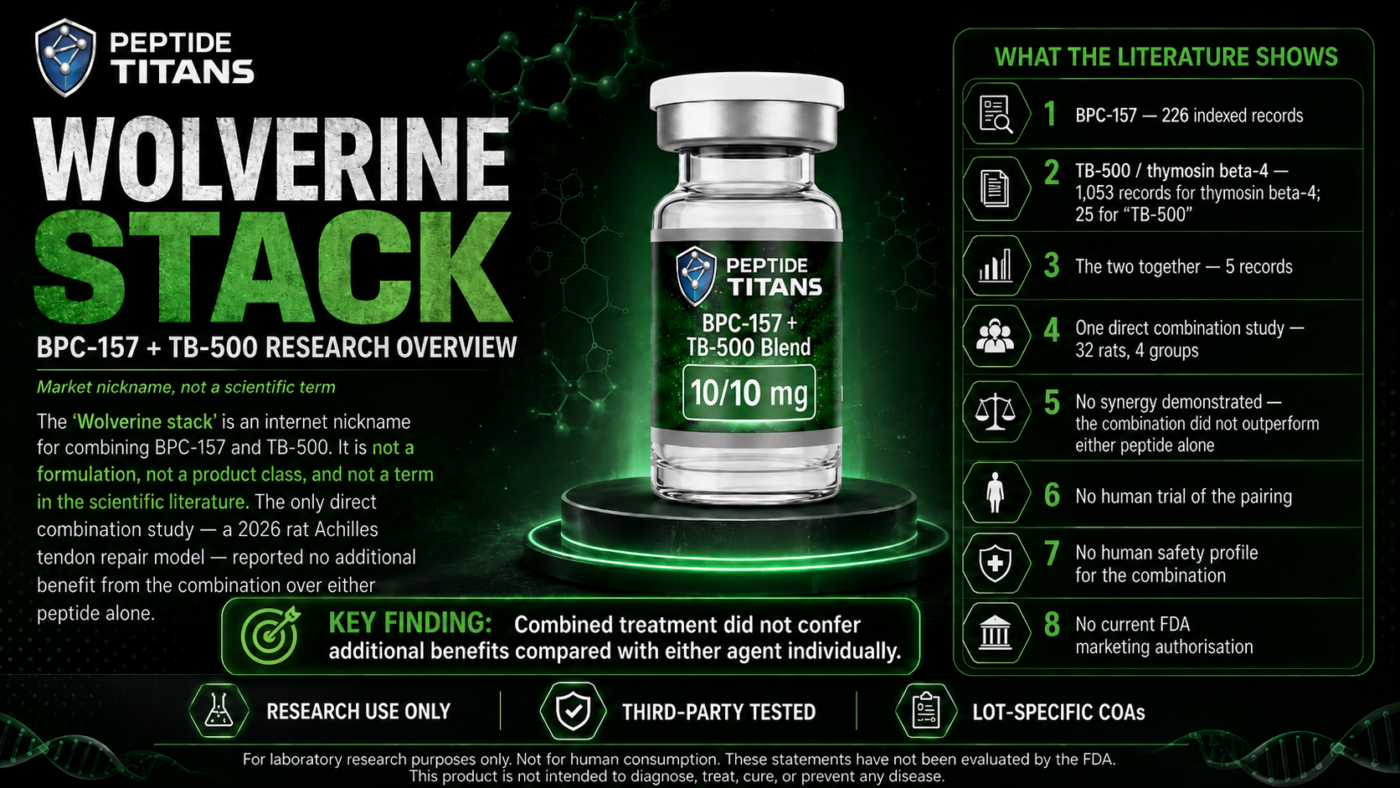
The Wolverine stack is a nickname for combining BPC-157 and TB-500. The one study that tested the combination found it conferred no additional benefit over either
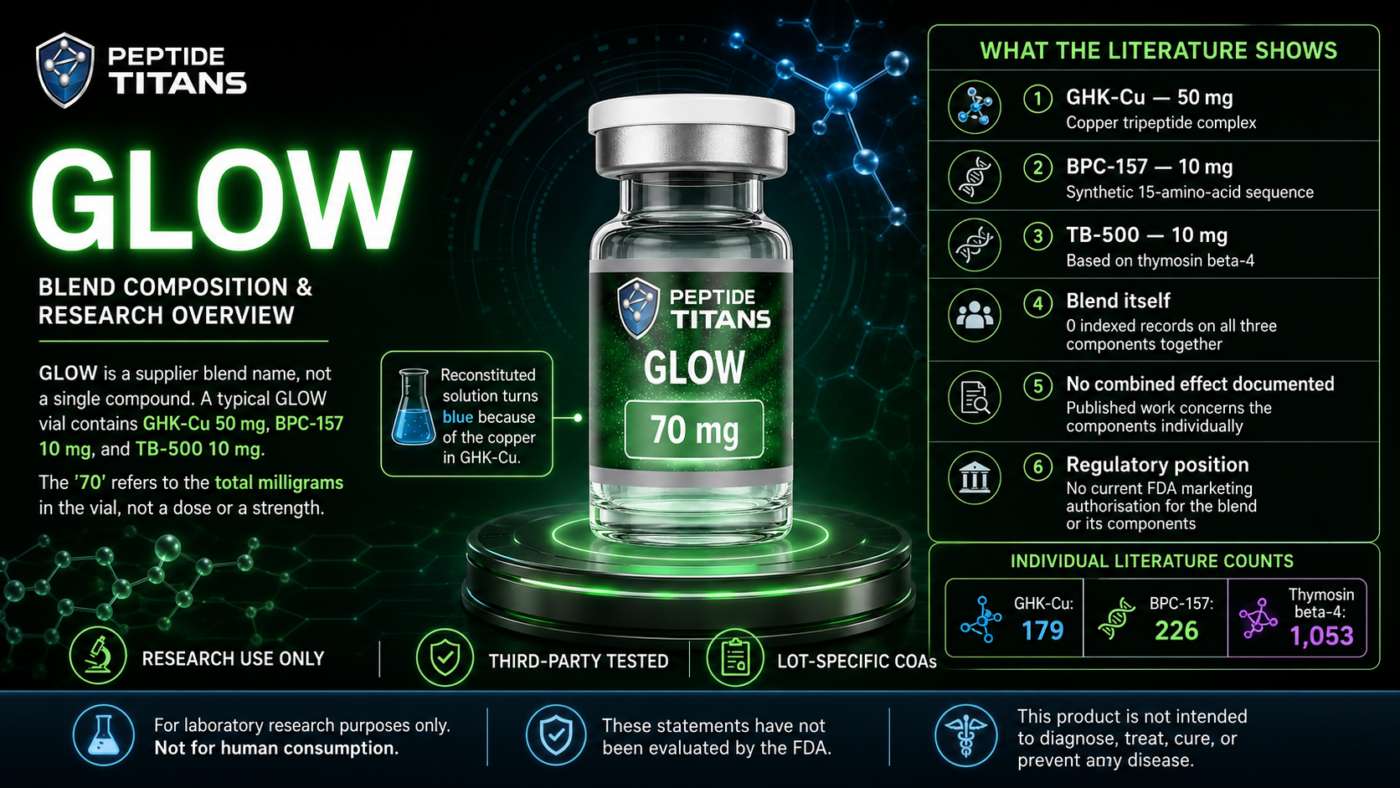
GLOW is a three-peptide research blend of GHK-Cu, BPC-157 and TB-500, totalling 70 mg per vial. What is in it, what the literature examines for each
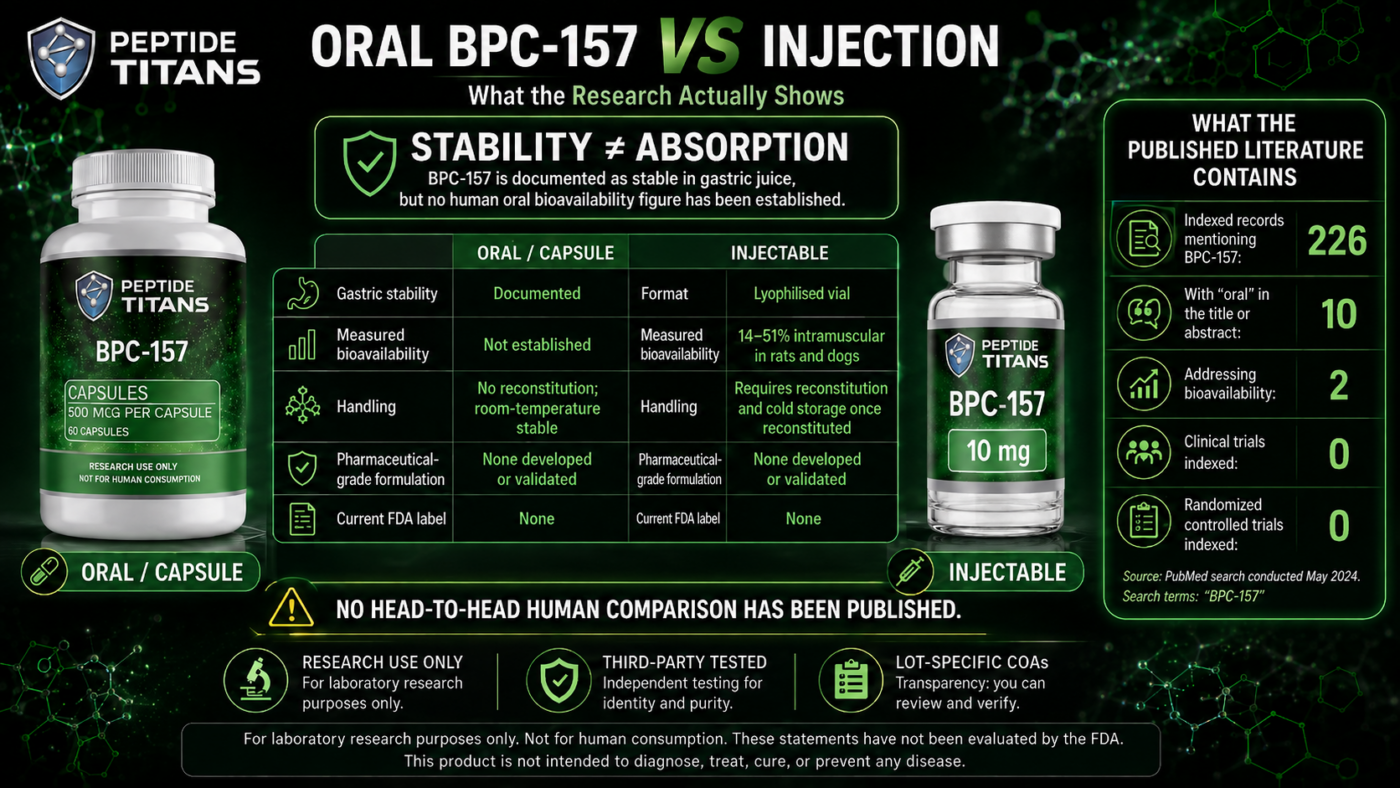
BPC-157 survives gastric acid, but that is not the same as being absorbed. The bioavailability figures in circulation are intramuscular, from rats and dogs. What the
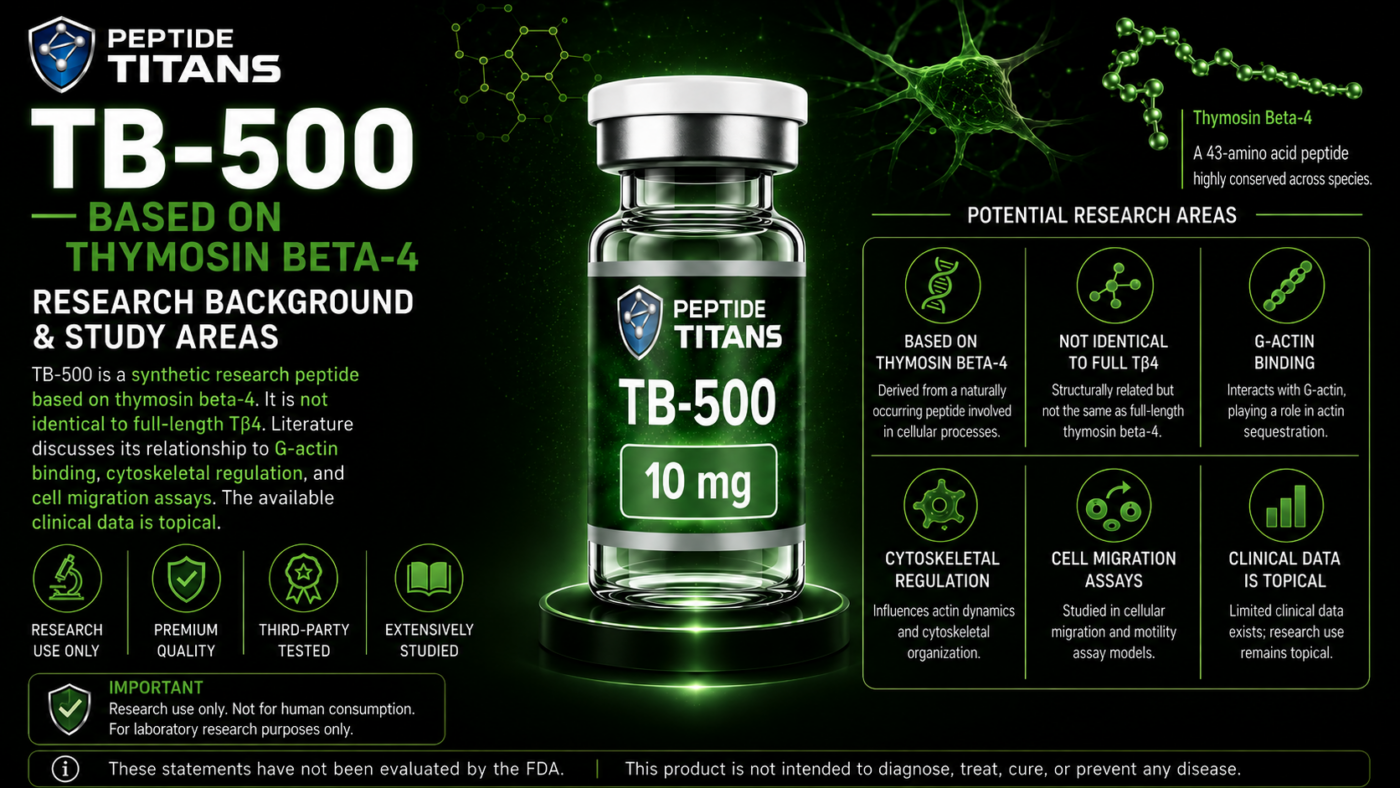
TB-500 is the supplier name for a peptide based on thymosin beta-4, an actin-binding protein. What the published Tβ4 research examines, why the two names are
Weekly peptide research summaries, testing guides, and documentation updates.
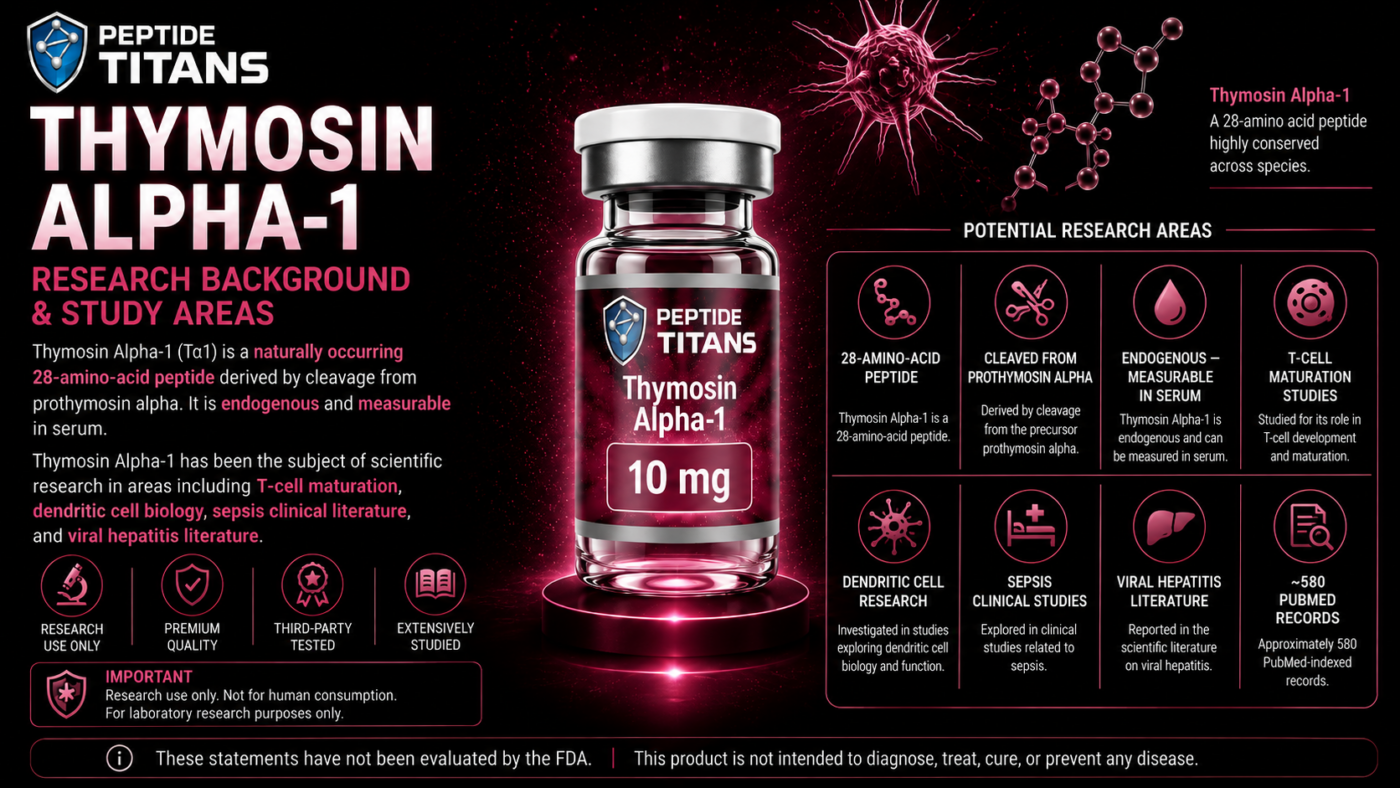
Thymosin alpha-1 is a 28-amino-acid peptide produced by the thymus, studied mainly for immune modulation. What it is, what the literature examines, and what it does
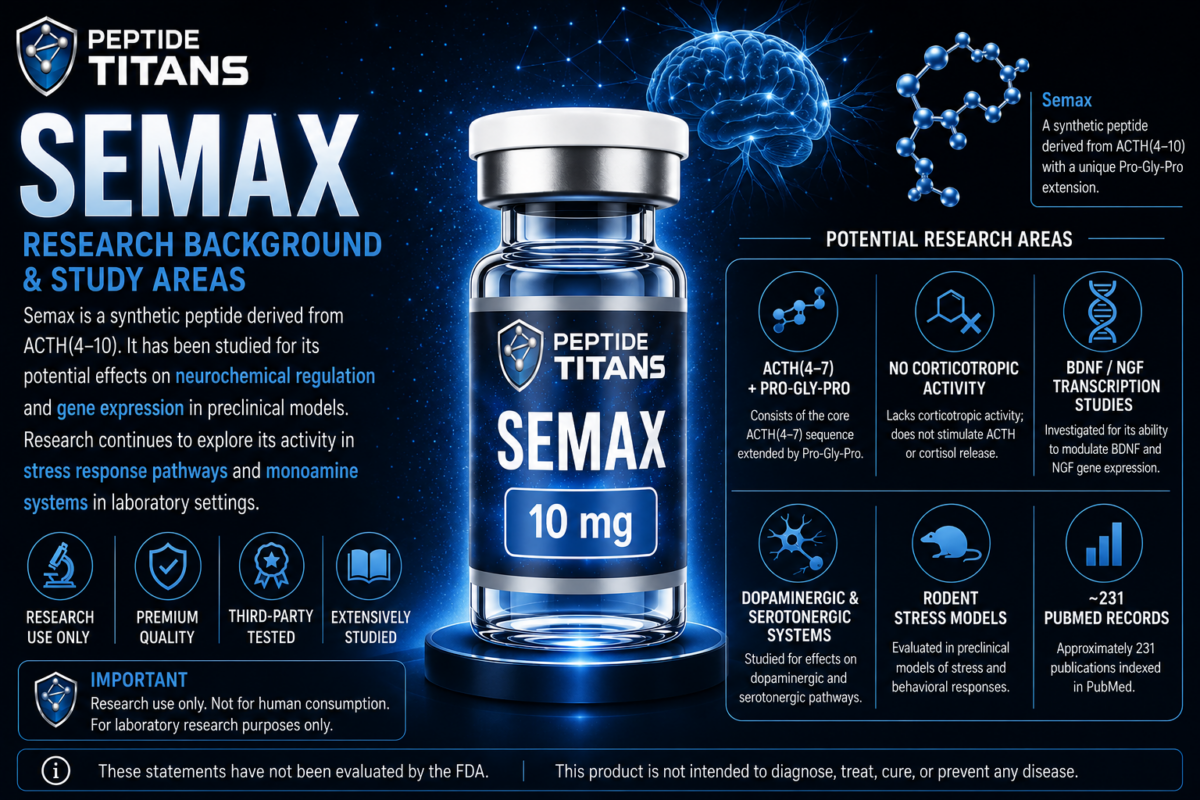
Semax is a synthetic heptapeptide derived from ACTH, developed in Russia. What it is, why it has no hormonal activity, what the neurotrophin research examines, and
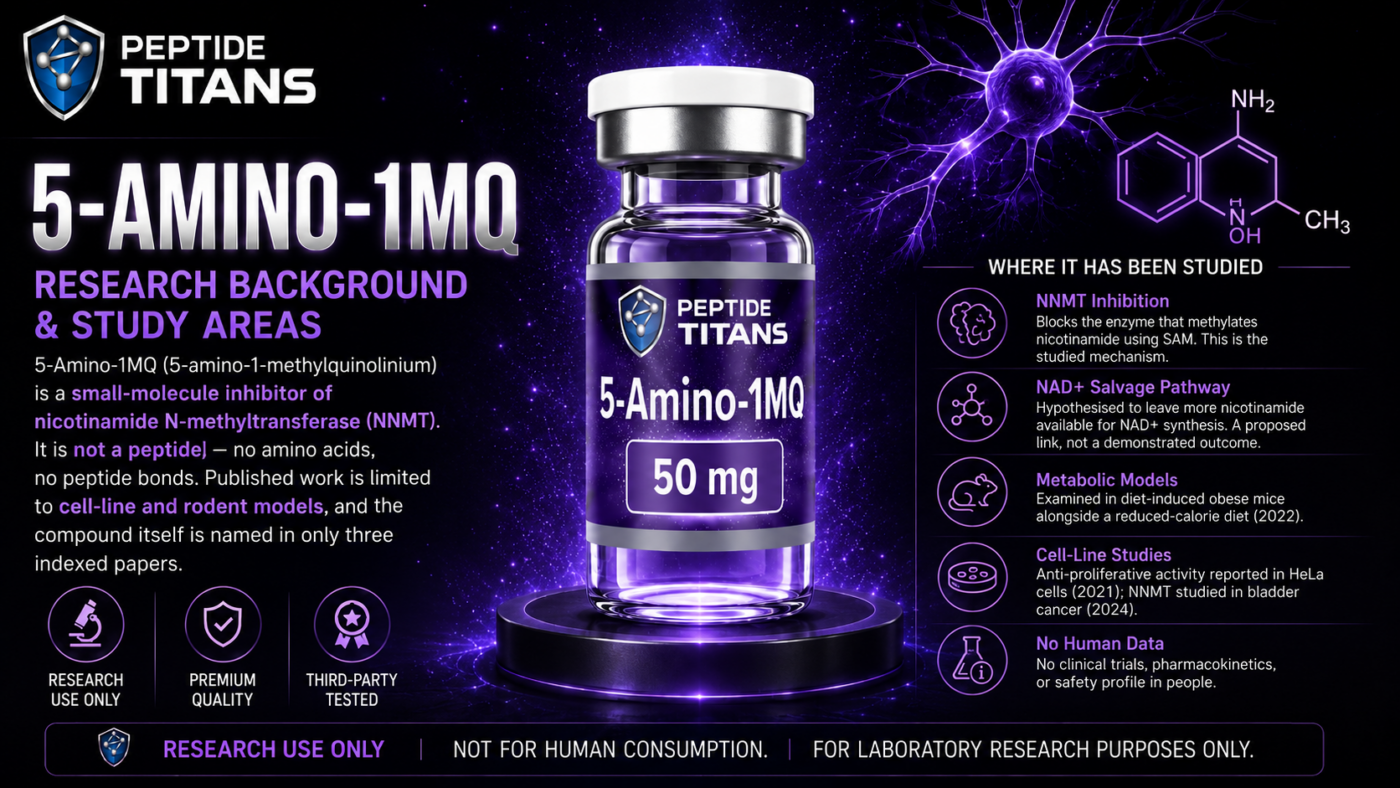
5-Amino-1MQ is a small-molecule NNMT inhibitor, not a peptide. What it is, how large its literature actually is, what the NNMT research examines, and what none
Discount Applied Successfully!
Your savings have been added to the cart.