
Are Peptides FDA-Approved? Which Ones, and What Approval Means
Some peptides are FDA-approved drugs; most compounds sold for research are not. What approval actually means, which peptide drugs hold approvals, and how to check for
Educational, research-only overviews of peptides, blends, testing methods, and how to read the scientific literature. For laboratory and research use only.
Some peptides are FDA-approved drugs; most compounds sold for research are not. What approval actually means, which peptide drugs hold approvals, and how to check for
The FD&C Act, intended use, section 503A and the Pharmacy Compounding Advisory Committee: the actual machinery that determines how research peptides are regulated in the U.S.
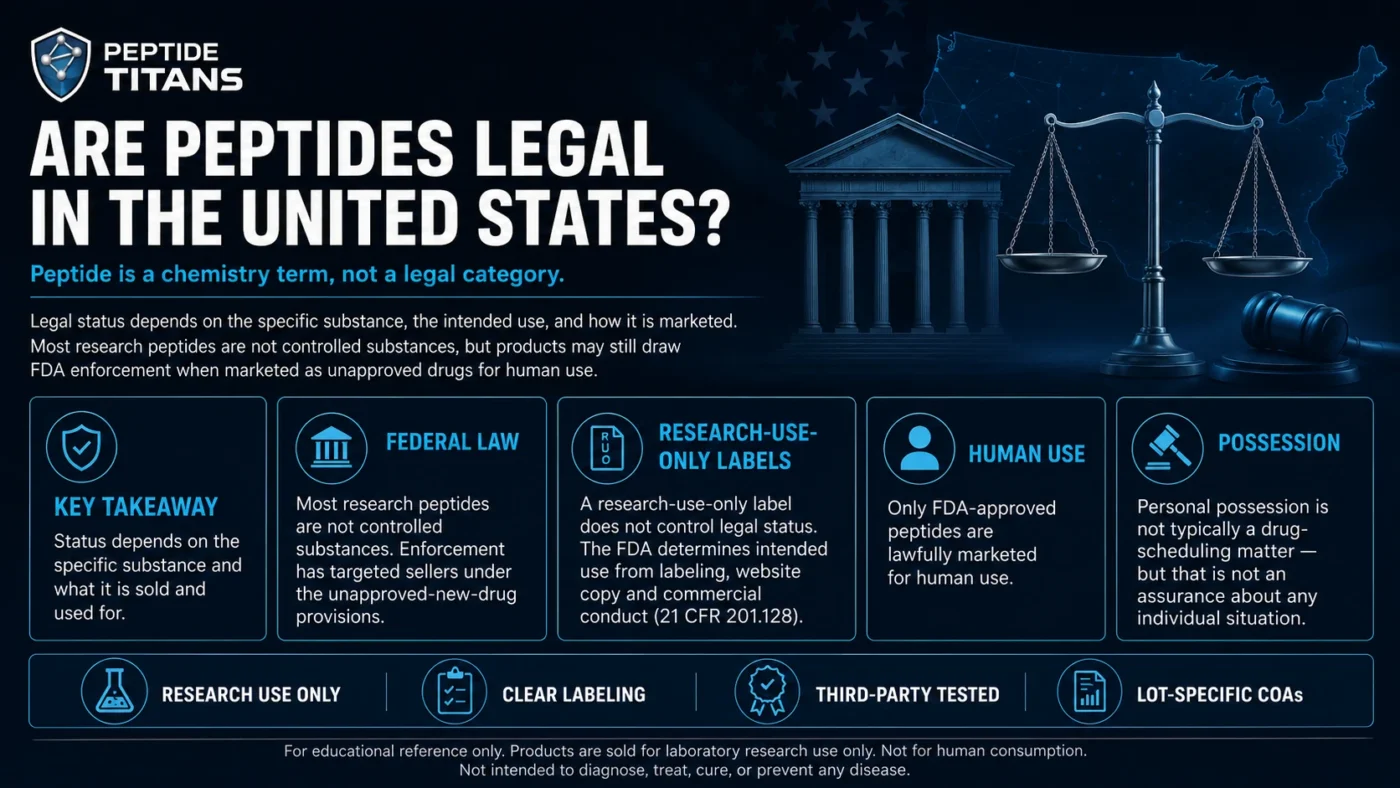
Peptide is not a legal category. What US law actually says, what the July 2026 FDA advisory committee vote changed, and why a research-use-only label is
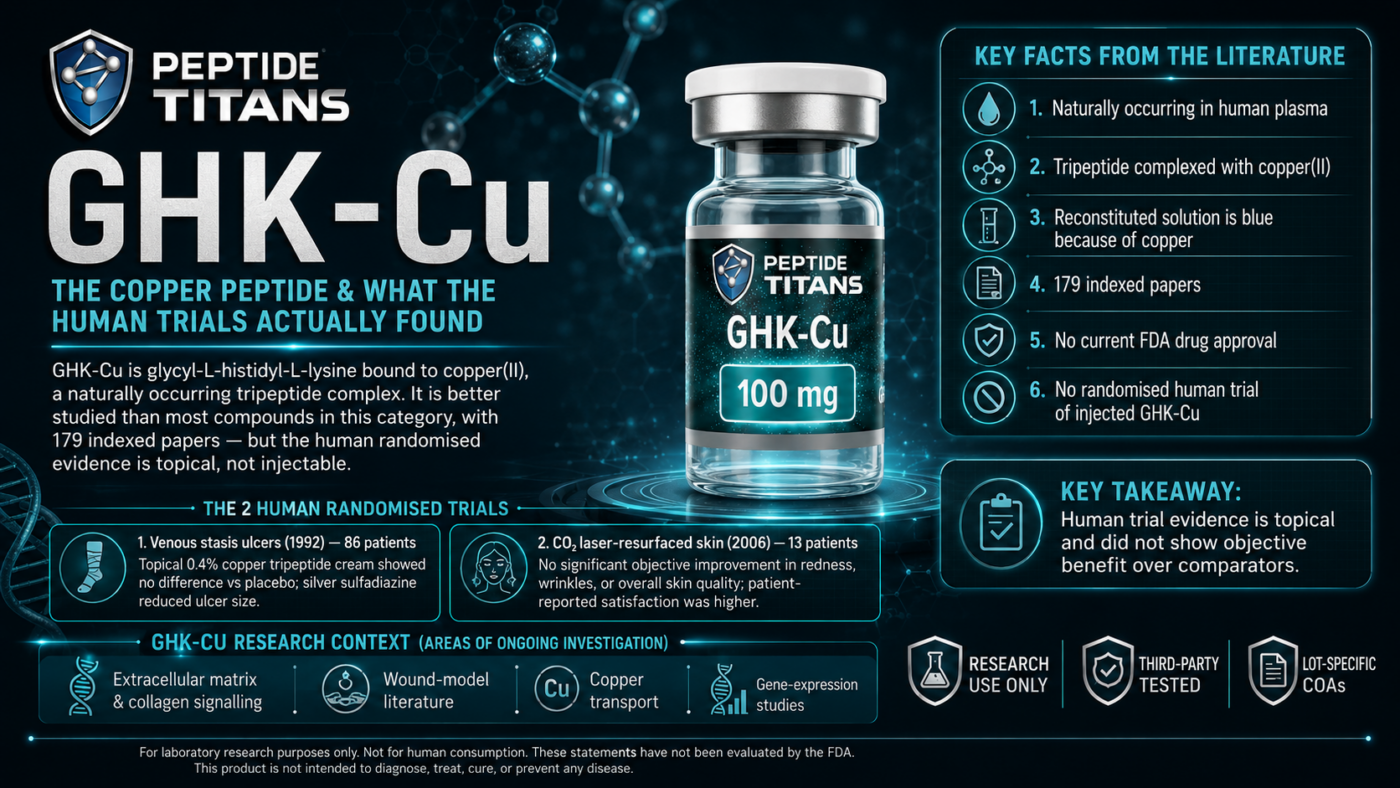
GHK-Cu has 179 published papers and, unusually, randomised human trials. Both were topical, and neither showed an objective benefit.
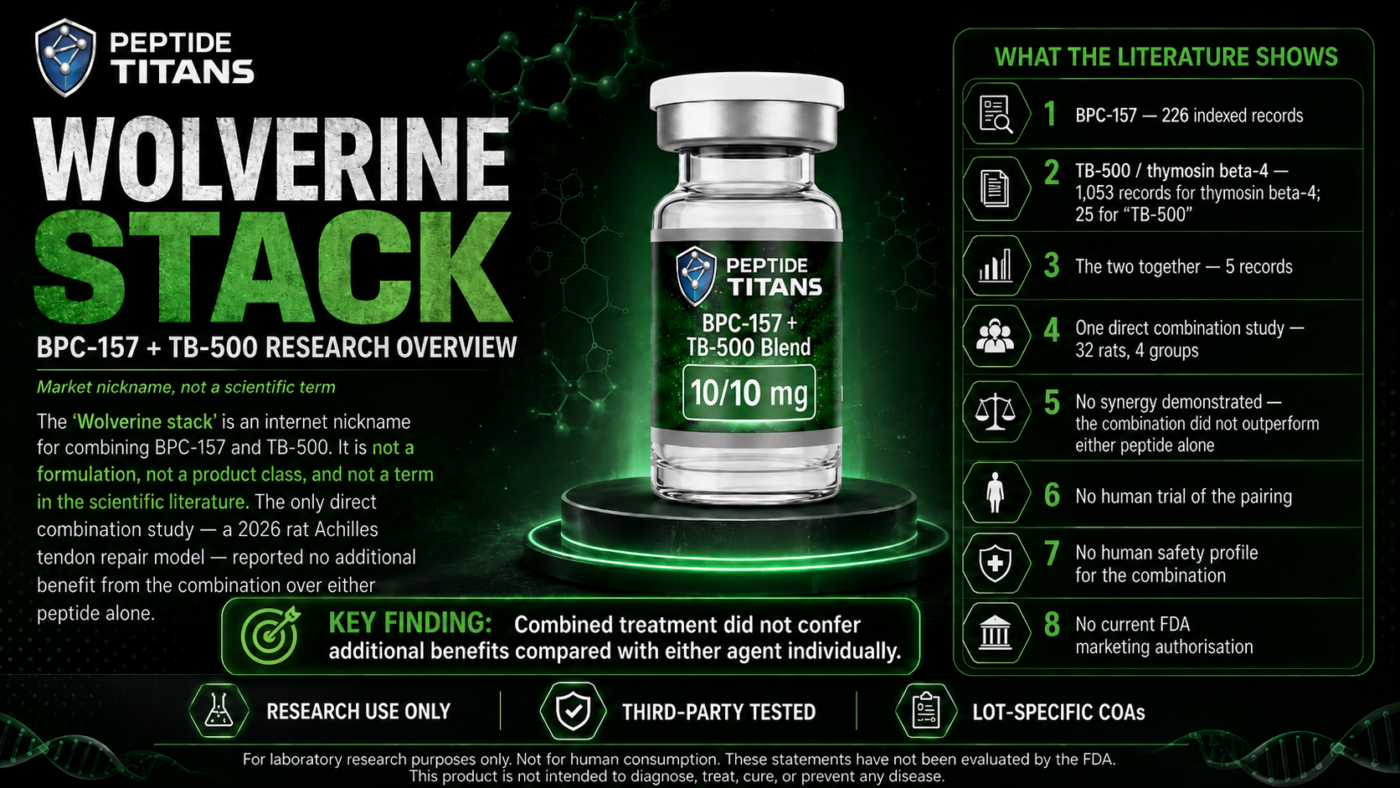
The Wolverine stack is a nickname for combining BPC-157 and TB-500. The one study that tested the combination found it conferred no additional benefit over either
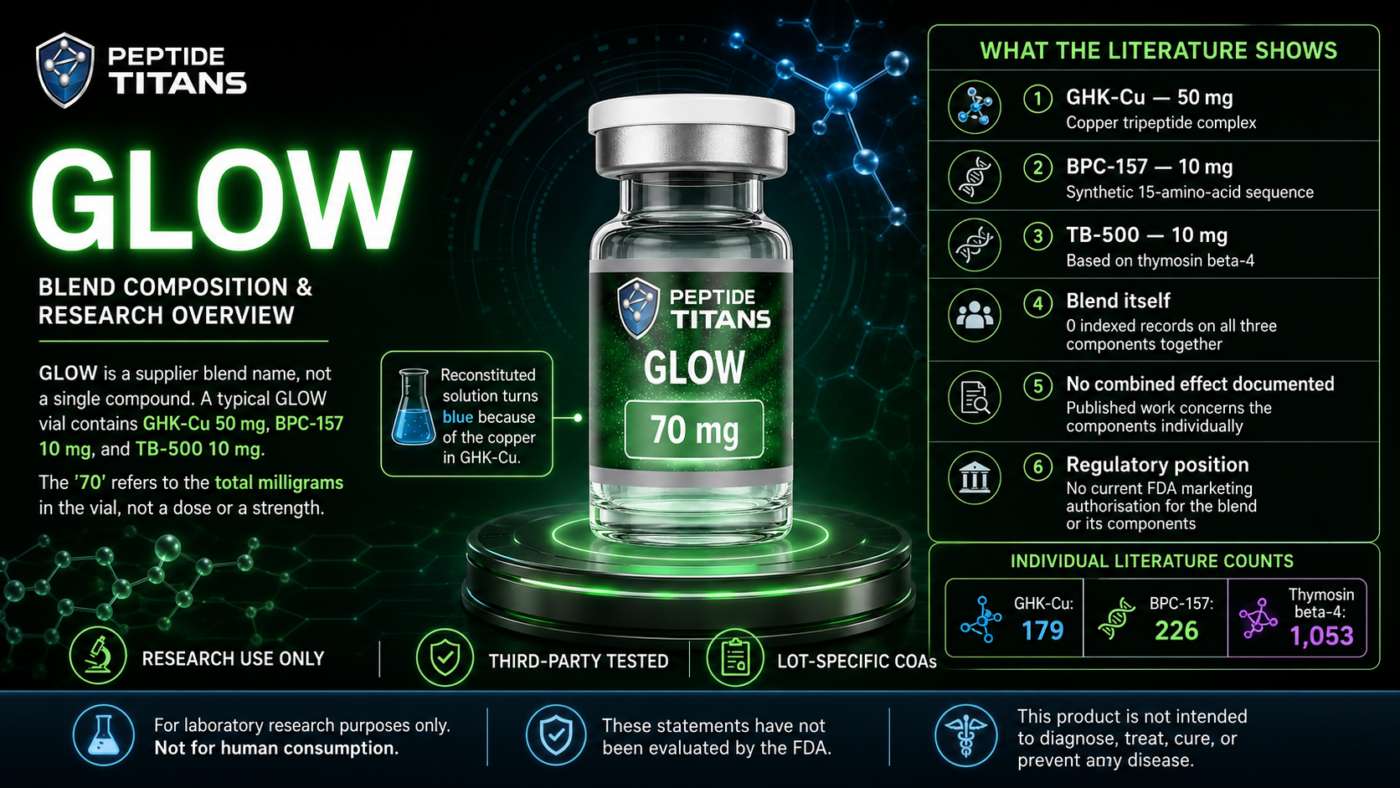
GLOW is a three-peptide research blend of GHK-Cu, BPC-157 and TB-500, totalling 70 mg per vial. What is in it, what the literature examines for each
Weekly peptide research summaries, testing guides, and documentation updates.
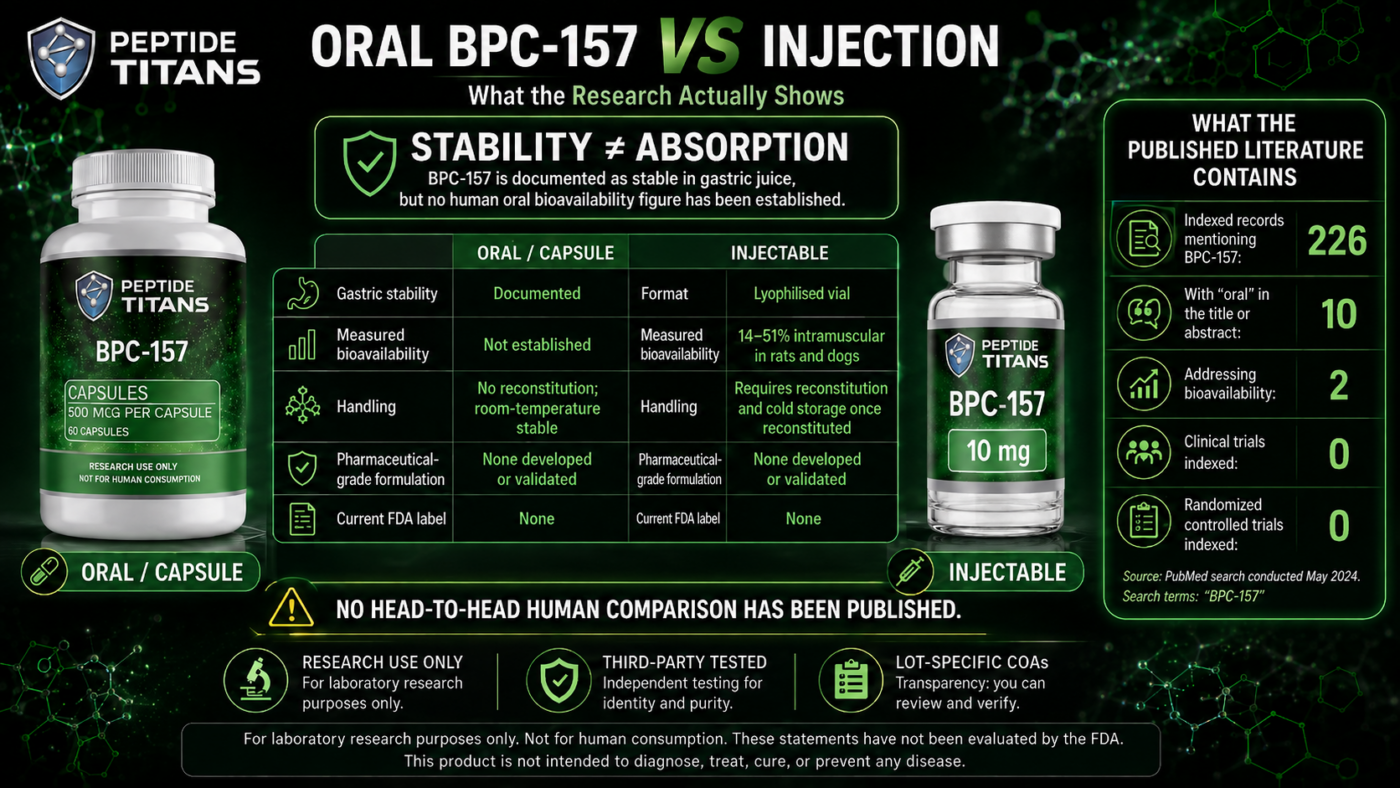
BPC-157 survives gastric acid, but that is not the same as being absorbed. The bioavailability figures in circulation are intramuscular, from rats and dogs. What the
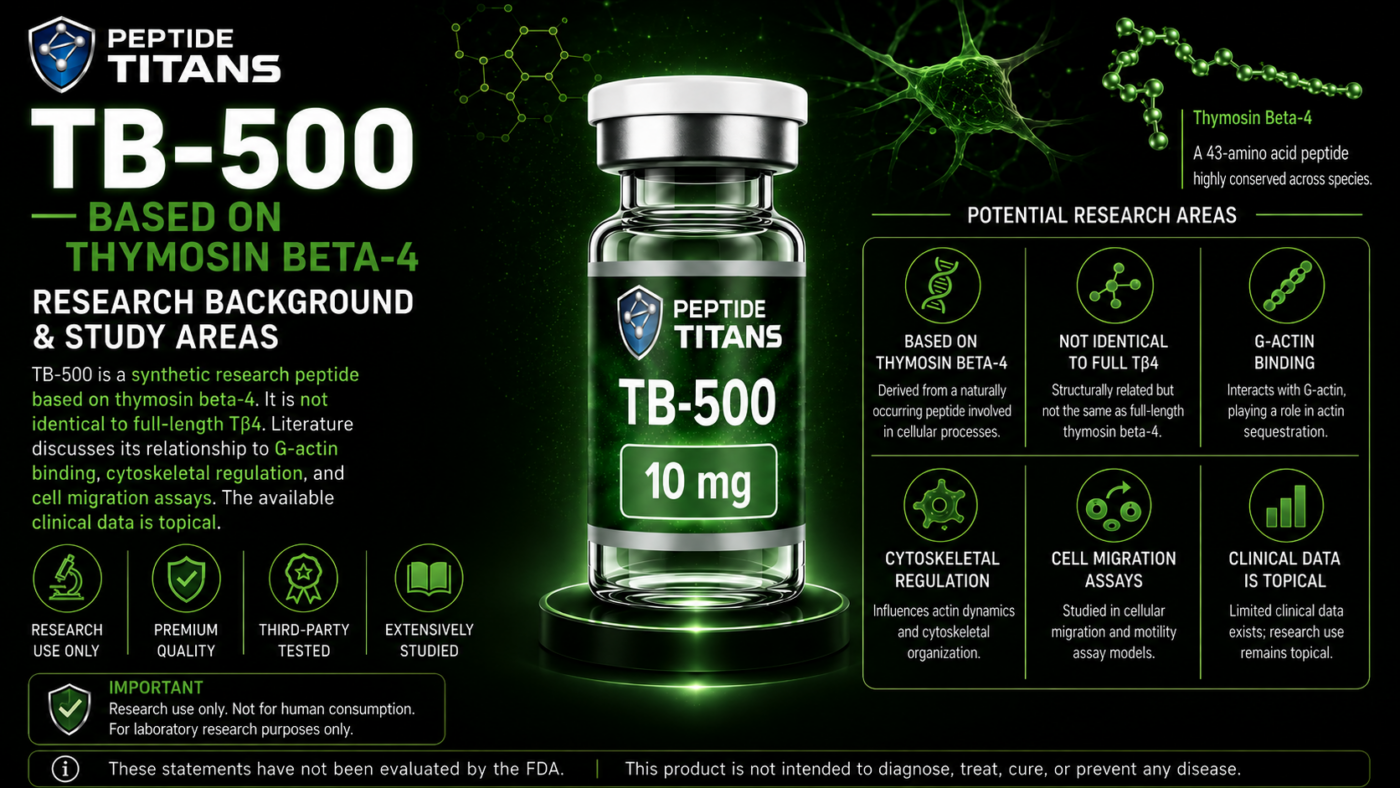
TB-500 is the supplier name for a peptide based on thymosin beta-4, an actin-binding protein. What the published Tβ4 research examines, why the two names are
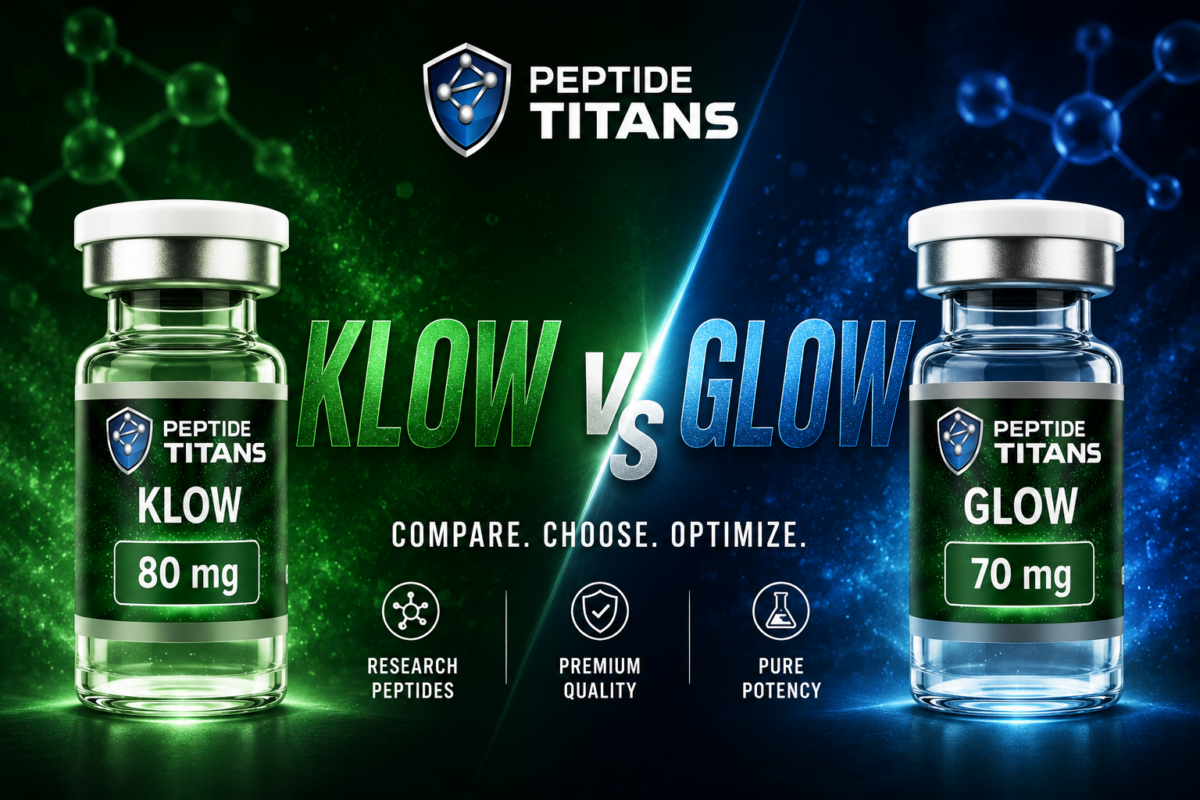
KLOW and GLOW share the same three-peptide base. KLOW adds KPV, taking the vial from 70 mg to 80 mg. A factual, research-only comparison of composition,
Discount Applied Successfully!
Your savings have been added to the cart.