
How Research Peptides Are Regulated in the United States
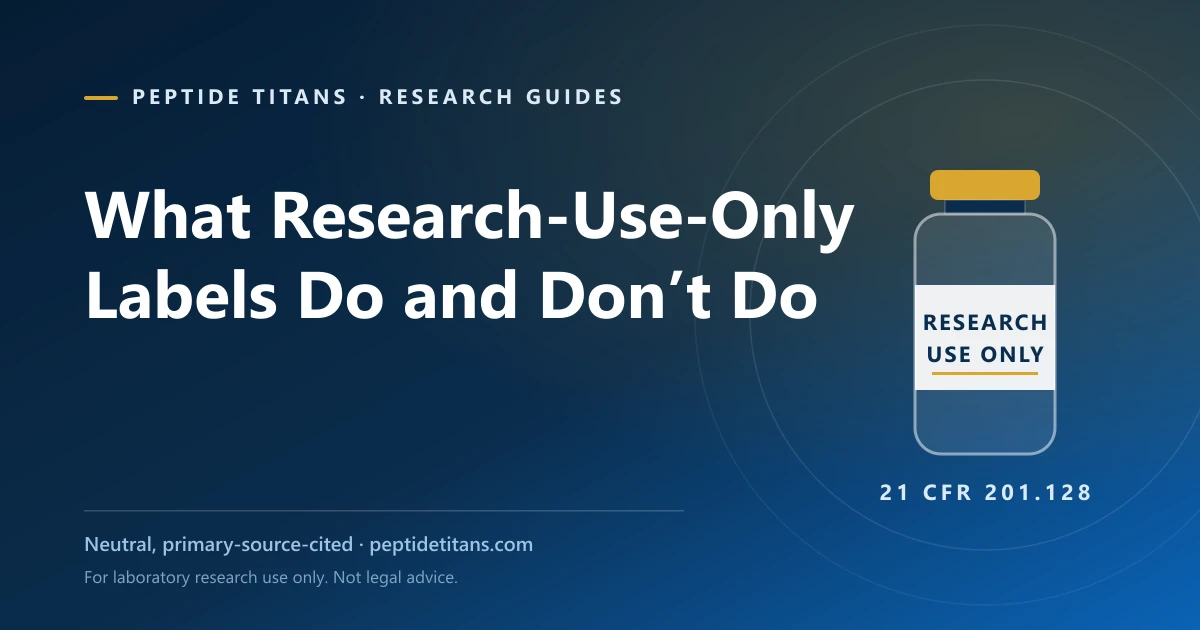
The FD&C Act, intended use, section 503A and the Pharmacy Compounding Advisory Committee: the actual machinery that determines how research peptides are regulated in the U.S.
Educational, research-only overviews of peptides, blends, testing methods, and how to read the scientific literature. For laboratory and research use only.
The FD&C Act, intended use, section 503A and the Pharmacy Compounding Advisory Committee: the actual machinery that determines how research peptides are regulated in the U.S.
Peptide COA interpretation is essential for laboratory researchers who require reproducible, well-characterized materials. Recent industry reporting has highlighted a widening verification gap in the research peptide
Chonluten research is represented by a small corpus of preclinical reports, primarily focused on the tripeptide Glu-Asp-Gly (EDG). This article summarizes how chonluten research appears in
Cagrilintide (AM833) is a long-acting amylin analogue that appears in medicinal-chemistry, formulation and pharmacology literature. This article summarizes what has been published about it: mechanisms investigated,
This article provides a literature-focused introduction to BAM-15 as an active compound and summarizes published research themes, experimental models, and common terminology encountered in laboratory studies.
Adipotide (often abbreviated FTPP in the literature when referring to the full targeting–proapoptotic construct) has been used in laboratory research as a ligand-directed peptidomimetic to probe
This article provides a research-focused overview of AOD9604 as it appears in published literature. The aim is educational: to summarize what the compound is, how it
Thymalin is a polypeptide preparation derived from thymus tissue that has appeared in experimental and observational scientific literature. Published studies and reviews describe short peptide fractions
Epithalon (also written Epitalon or Epitalon/AEDG) is a short synthetic tetrapeptide—Ala‑Glu‑Asp‑Gly (AEDG)—that appears in preclinical and translational research literature. This article presents a research-only overview of
Discount Applied Successfully!
Your savings have been added to the cart.