Molecular Characteristics
Complete Specifications
Structural Composition
D-Arg-Dmt-Lys-Phe-NH₂ (Dmt = 2′,6′-dimethyltyrosine)
Physical Properties
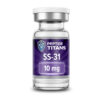
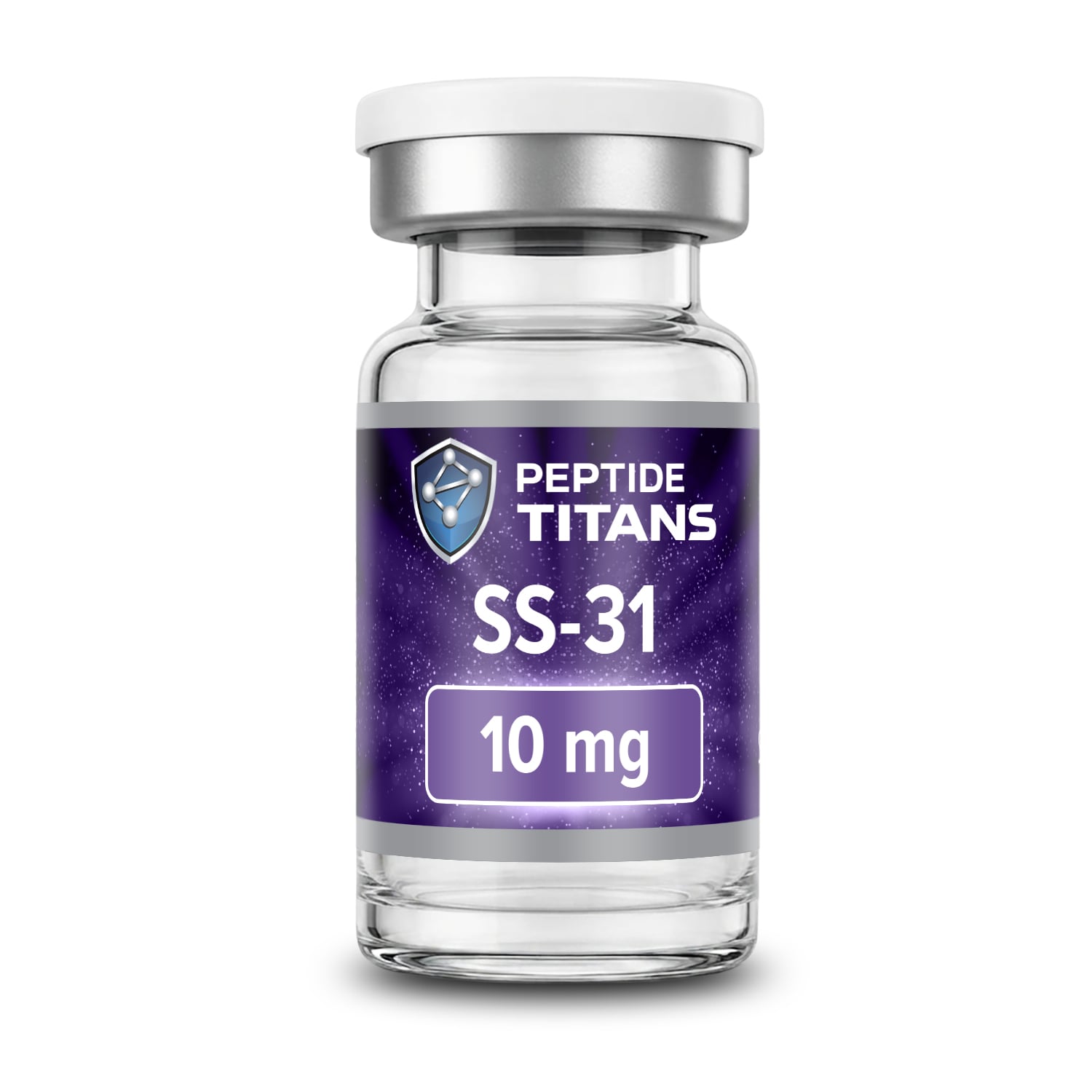
SS-31 is a synthetic tetrapeptide containing both standard and non-natural amino acid residues, including D-amino acids and 2′,6′-dimethyltyrosine, which contribute to enhanced resistance to enzymatic degradation under research conditions. Its small size and cationic nature support efficient cellular interaction and strong aqueous solubility. Lyophilized storage under cold, dry conditions is recommended. Protection from moisture, light exposure, and repeated freeze–thaw cycles helps preserve structural integrity and maintain analytical consistency during laboratory applications.
Analysis & Documentation
Identity
Each production lot is checked against the reference structure recorded for this compound:
- Classification — Synthetic tetrapeptide
- Molecular formula — C₃₂H₄₉N₉O₅
- Expected mass — ~639.80 Da
- CAS registry — 736992-21-5
- Chain length — 4 amino acids (modified tetrapeptide)
- PubChem CID — 11245627
Analytical Methods
Testing is carried out per lot by an independent laboratory. The methods measure what the material is and how much of it is the target compound:
- RP-HPLC — reverse-phase separation of the target from process-related impurities; purity is reported as area percent of the main peak
- Mass spectrometry — observed mass compared against the expected molecular mass above
- Retention time — compared against a reference standard run under the same conditions
- Chromatogram — reproduced on the certificate so the peak and any shoulders can be inspected directly
Material & Documentation
What arrives, and how to tie it back to its paperwork:
- Appearance as supplied — White to off-white lyophilized powder
- Solubility — Water, buffered aqueous solutions (e.g., PBS)
- Lot number — printed on the container label and used to look up the certificate
- Certificate — indexed by lot at Certificates of Analysis
Laboratory Handling and Storage Protocols
Lyophilized Powder Storage
- Store at –20°C to –80°C in the original, sealed vial
- Protect from light exposure and moisture
- A desiccated storage environment is recommended
- Stability data suggests extended stability when stored at −20 °C or below.
Reconstituted Solution Storage
- Short-term storage: Up to 7 days at 4°C
- Long-term storage: Store at –20°C in aliquots
- Use single-use aliquots to preserve peptide integrity
- Minimize freeze–thaw cycles; single-use aliquots are strongly recommended
Stability Characteristics
SS-31 is a synthetic peptide research compound that demonstrates stable handling characteristics when managed according to standard peptide laboratory protocols. Proper cold storage of the lyophilized material, careful reconstitution, and minimized freeze–thaw exposure help maintain structural integrity and solubility. When handled appropriately, SS-31 supports consistent use in in vitro and analytical research applications.
Frequently Asked Questions
What is SS-31?
SS-31 is a synthetic tetrapeptide supplied as a lyophilized research material. Each production lot’s identity and purity are verified by independent HPLC and mass-spectrometry testing.
How does SS-31 differ from MOTS-c?
They are distinct compounds. SS-31 is a synthetic tetrapeptide (CAS 736992-21-5); MOTS-c is a 16-amino-acid peptide with its own catalog listing. Each has a separate research profile and lot-specific documentation.
Is SS-31 naturally occurring?
No. SS-31 is a synthetically engineered peptide and does not occur naturally in biological systems.
How is SS-31 supplied?
SS-31 is typically supplied as a lyophilized (freeze-dried) powder in sealed research vials to preserve stability during storage and shipment.
How should unreconstituted SS-31 be stored?
Lyophilized SS-31 should be stored:
-
Long-term: −20 °C to −80 °C
-
Short-term: 2–8 °C
Keep vials sealed and protected from light and moisture until use.
How should reconstituted SS-31 be handled and stored?
Once reconstituted:
-
Store at 2–8 °C for short-term laboratory use
-
For extended storage, aliquot and freeze at −20 °C or below
-
Minimize freeze–thaw cycles using single-use aliquots
-
Gently swirl to mix; avoid vigorous agitation
Does SS-31 require a Certificate of Analysis (COA)?
Yes. A Certificate of Analysis (COA) should be available for each batch of SS-31, verifying identity, purity, and analytical testing results to ensure research quality and traceability.
Is SS-31 FDA-approved?
Research-grade SS-31 is not FDA-approved as a drug, supplement, or therapeutic product. It is sold exclusively as a research compound and must not be marketed or used for diagnostic, therapeutic, or consumption purposes.
What is SS-31 peptide?
A synthetic tetrapeptide used in laboratory research. See the SS-31 research profile for literature context.
How is this vial tested?
Independent HPLC on every production lot, with a lot-specific COA. See the COA library and why HPLC alone isn’t enough.
Is this for human use?
No. Research use only. Not for human or veterinary use.
Where is the research write-up?
This product is not for human consumption. It is sold strictly for research and educational purposes and is not intended to diagnose, treat, cure, or prevent any disease.
Any clinical data or research information referenced on this page is derived from peer-reviewed scientific literature and official publications. This information is provided for educational reference only and does not constitute medical advice or product claims.
By purchasing this product, you acknowledge that you are a qualified researcher and agree to use it in full compliance with all applicable laws and regulations.