
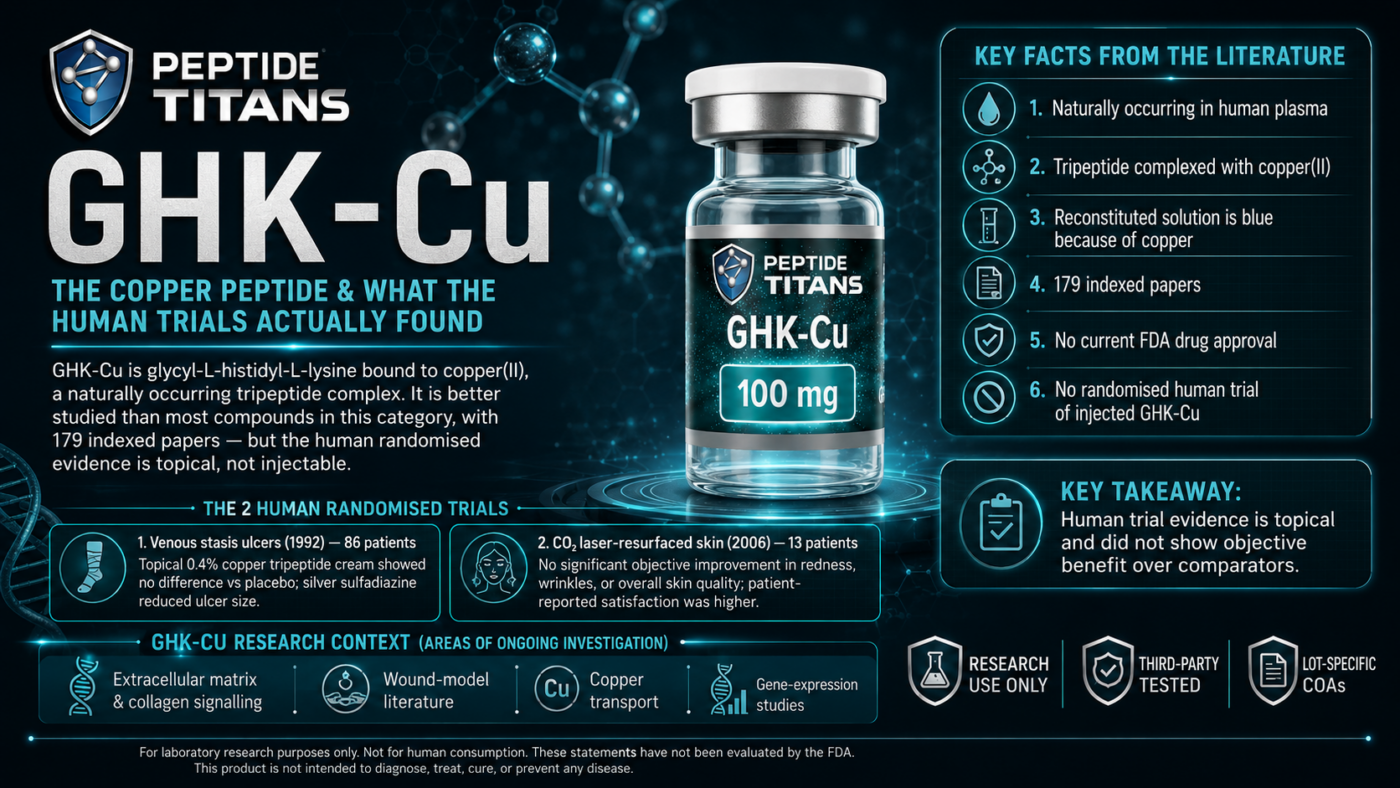
What Is GHK-Cu? The Copper Peptide, and What the Human Trials Actually Found
GHK-Cu has 179 published papers and, unusually, randomised human trials. Both were topical, and neither showed an objective benefit.
Educational, research-only overviews of peptides, blends, testing methods, and how to read the scientific literature. For laboratory and research use only.
GHK-Cu has 179 published papers and, unusually, randomised human trials. Both were topical, and neither showed an objective benefit.
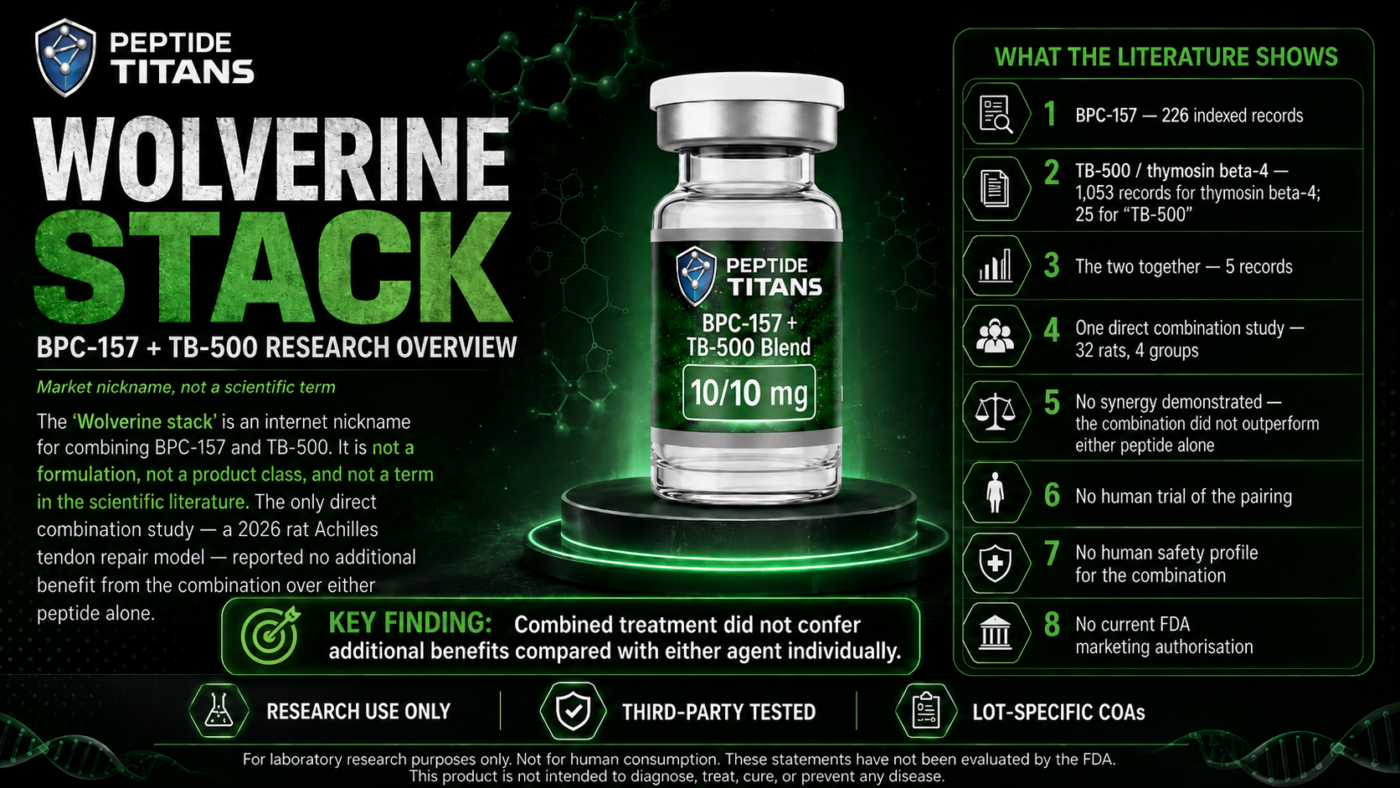
The Wolverine stack is a nickname for combining BPC-157 and TB-500. The one study that tested the combination found it conferred no additional benefit over either
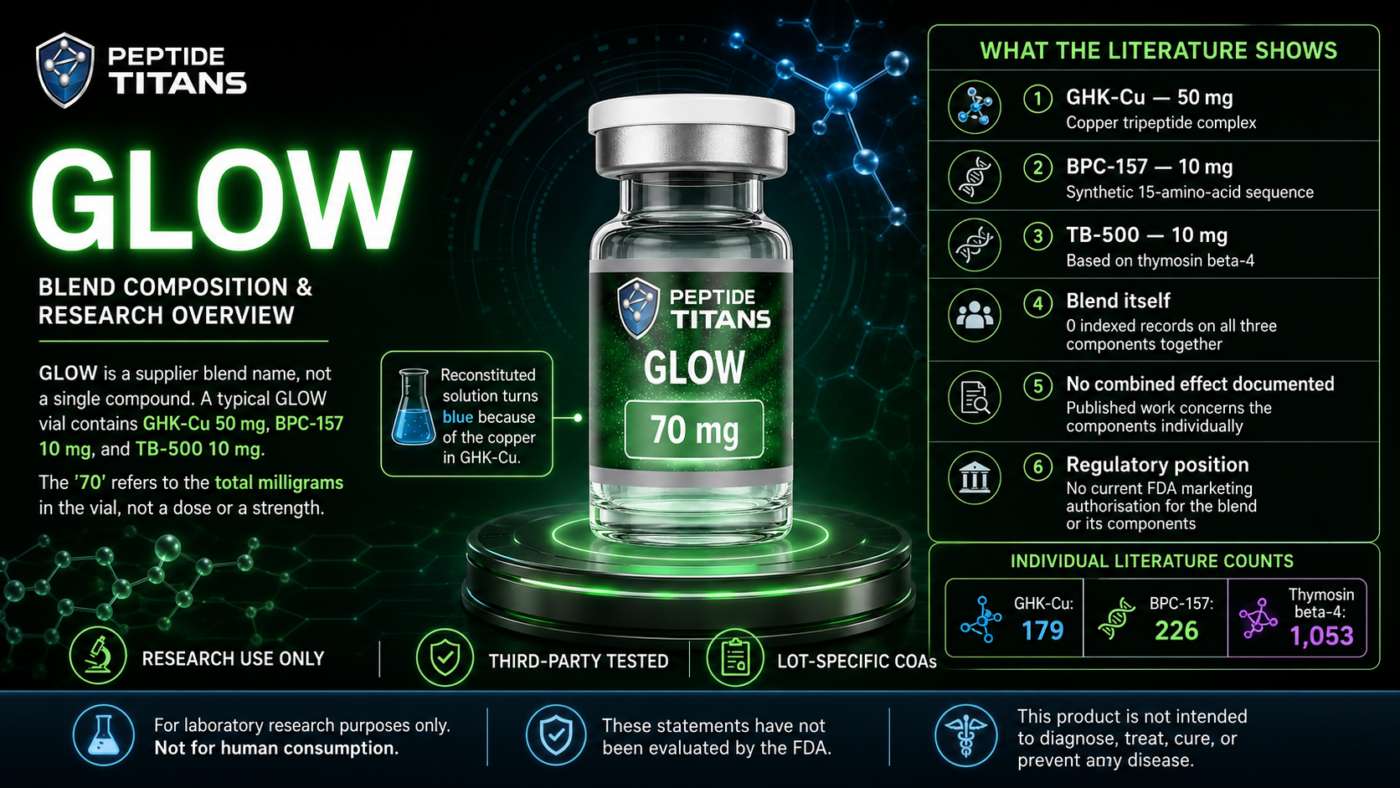
GLOW is a three-peptide research blend of GHK-Cu, BPC-157 and TB-500, totalling 70 mg per vial. What is in it, what the literature examines for each
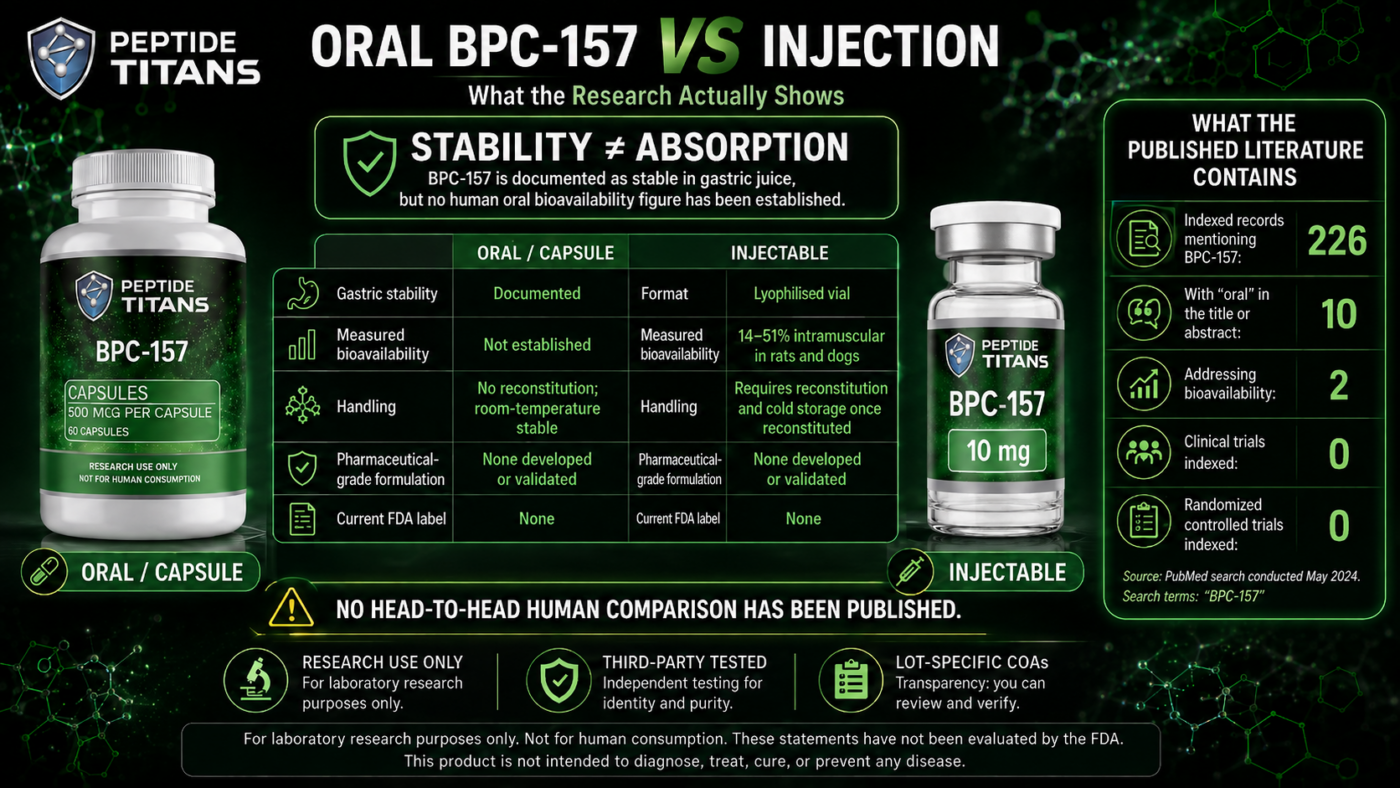
BPC-157 survives gastric acid, but that is not the same as being absorbed. The bioavailability figures in circulation are intramuscular, from rats and dogs. What the
Discount Applied Successfully!
Your savings have been added to the cart.