



Molecular Characteristics
Complete Specifications
-
CAS Registry Number: 218949-48-5
-
PubChem CID: Not available
-
Peptide Classification: Synthetic 44-amino-acid growth hormone–releasing hormone (GHRH) analog
-
Molecular Formula: C₂₂₁H₃₆₆N₇₂O₆₇
-
Molecular Weight: ~5,135.9 Da
Structural Composition
-
Amino Acid Sequence:
44-amino-acid synthetic analog of human growth hormone–releasing hormone (GHRH) with targeted amino acid substitutions for enhanced stability -
Length: 44 amino acids (modified)
Physical Properties
-
Appearance: White to off-white lyophilized powder
-
Solubility: Water, bacteriostatic water, buffered aqueous solutions (e.g., PBS)
Structural & Stability Notes
Tesamorelin is a synthetic 44-amino-acid analog of growth hormone–releasing hormone (GHRH) engineered with targeted amino acid substitutions to enhance resistance to enzymatic degradation under research conditions. Its extended peptide chain and structural modifications provide improved stability compared to shorter GHRH fragments. As with other long-chain peptides, lyophilized storage under cold, dry conditions is recommended. Protection from moisture, light exposure, and repeated freeze–thaw cycles helps preserve structural integrity and maintain analytical consistency during laboratory applications.

Research Applications
Growth Hormone–Releasing Hormone (GHRH) Signaling Research
Tesamorelin is utilized as a synthetic growth hormone–releasing hormone (GHRH) analog in research studies examining pituitary signaling and growth hormone regulatory pathways. Laboratory investigations focus on its role in:
-
GHRH Receptor Activation Models: Investigation of receptor binding affinity and intracellular signaling cascades
-
cAMP and PKA Pathway Studies: Evaluation of second messenger activation following receptor stimulation
-
Pituitary Somatotroph Research: Analysis of intracellular mechanisms regulating growth hormone release dynamics
-
Receptor Desensitization Models: Examination of adaptive responsiveness following repeated stimulation
-
Peptide Stability Studies: Investigation of structural persistence and signaling duration in laboratory systems
Experimental protocols commonly employ receptor-binding assays, pituitary cell cultures, and intracellular signaling analyses to characterize Tesamorelin-mediated endocrine responses.
IGF-1 Axis and Endocrine Regulation Research
Tesamorelin has been examined in research contexts involving growth hormone–associated endocrine networks and insulin-like growth factor (IGF-1) signaling pathways. Key areas of investigation include:
-
IGF-1 Expression Models: Evaluation of hepatic-associated transcriptional regulation following growth hormone signaling
-
AKT and mTOR Pathway Studies: Investigation of intracellular cascades associated with anabolic signaling models
-
Endocrine Feedback Regulation Research: Analysis of hypothalamic–pituitary–liver axis coordination
-
Somatostatin Interaction Models: Research into counter-regulatory signaling within growth hormone systems
-
Hormonal Pulse Pattern Studies: Examination of temporal signaling dynamics under controlled laboratory conditions
These studies utilize hormone quantification assays, transcription factor profiling, and intracellular kinase activation analyses to evaluate endocrine signaling outcomes.
Metabolic and Lipid Signaling Research
Tesamorelin has also been explored in research models examining metabolic regulation and lipid-associated intracellular mechanisms, including:
-
Adipocyte Signaling Studies: Evaluation of intracellular cascades influencing lipid mobilization models
-
AMPK Pathway Research: Investigation of energy-sensing signaling mechanisms
-
Glucose Homeostasis Models: Analysis of intracellular pathways associated with metabolic balance
-
Hepatic Signaling Research: Examination of growth hormone–mediated liver regulatory pathways
Laboratory protocols assess metabolic enzyme activity, gene expression markers, and intracellular signaling dynamics using biochemical and molecular techniques.
Cellular Signaling and Endocrine Network Research
Additional research applications explore Tesamorelin’s influence on intracellular regulatory systems involved in growth hormone axis coordination, including:
-
MAPK and ERK Pathway Studies: Investigation of downstream cascades associated with receptor-mediated signaling
-
Gene Expression Profiling: Analysis of transcriptional responses linked to endocrine regulation
-
Receptor Sensitivity Research: Examination of adaptive signaling modulation within GHRH receptor systems
-
Integrated Hormonal Feedback Models: Analysis of coordinated endocrine networks maintaining systemic equilibrium
Research in this domain focuses on understanding how Tesamorelin influences GHRH receptor–mediated signaling pathways, growth hormone regulatory systems, and metabolic-associated intracellular responses under controlled experimental conditions.
Laboratory Handling and Storage Protocols
Lyophilized Powder Storage
-
Store at –20°C to –80°C in the original, sealed vial
-
Protect from light exposure and moisture
-
A desiccated storage environment is recommended
-
Stability data suggests extended stability when stored at −20 °C or below.
Reconstitution Guidelines
-
Reconstitute using sterile water, bacteriostatic water (0.9% benzyl alcohol), or an appropriate laboratory buffer
-
Introduce solvent slowly along the vial wall to minimize foaming
-
Mix using gentle swirling; avoid vigorous agitation or shaking
-
Allow complete dissolution prior to use (typically 1–2 minutes)
-
Ensure the final solution is within a physiologically neutral pH range appropriate for laboratory use
Reconstituted Solution Storage
-
Short-term storage: Up to 7 days at 4°C
-
Long-term storage: Store at –20°C in aliquots
-
Use single-use aliquots to preserve peptide integrity
-
Minimize freeze–thaw cycles; single-use aliquots are strongly recommended
Stability Characteristics
Tesamorelin is a synthetic peptide research compound that demonstrates stable handling characteristics when managed according to standard peptide laboratory protocols. Proper cold storage of the lyophilized material, protection from light, careful reconstitution, and minimized freeze–thaw exposure help preserve structural integrity and solubility. When handled appropriately, Tesamorelin supports consistent use in in vitro and analytical research applications.
Frequently Asked Questions
Tesamorelin is a synthetic peptide analog of GHRH designed to activate the GHRH receptor in experimental models. It is used in research investigating endocrine signaling and growth hormone regulatory mechanisms.
In laboratory and preclinical models, Tesamorelin is studied for:
-
GHRH receptor activation
-
Growth hormone release signaling
-
IGF-1 pathway investigation
-
Endocrine and metabolic signaling research
-
Hypothalamic–pituitary axis pathway models
All applications are exploratory and conducted in controlled research environments.
Both are GHRH analogs studied in endocrine research, but they differ structurally and in stability characteristics. CJC-1295 may be available in DAC and non-DAC forms, which can influence activity duration in experimental models, whereas Tesamorelin has its own distinct sequence and pharmacological profile.
No. Tesamorelin stimulates the GHRH receptor, which in turn influences endogenous growth hormone signaling pathways. It is not growth hormone itself.
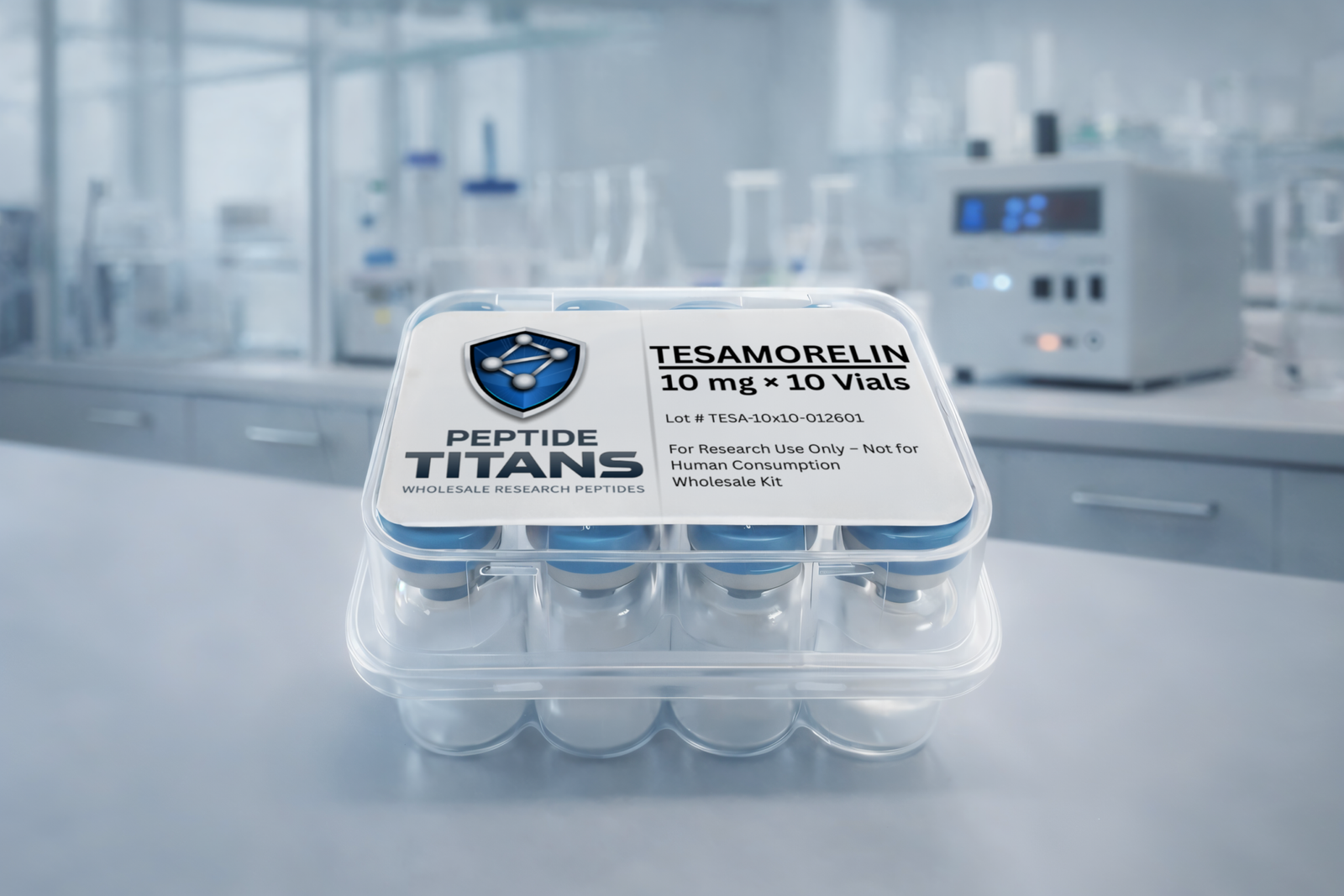
Tesamorelin is typically supplied as a lyophilized (freeze-dried) powder in sealed research vials to preserve stability during storage and shipment.
Lyophilized Tesamorelin should be stored:
-
Long-term: −20 °C to −80 °C
-
Short-term: 2–8 °C
Keep vials sealed and protected from light and moisture until use.
Once reconstituted:
-
Store at 2–8 °C for short-term laboratory use
-
For extended storage, aliquot and freeze at −20 °C or below
-
Minimize freeze–thaw cycles using single-use aliquots
-
Gently swirl to mix; avoid vigorous agitation
Yes. A Certificate of Analysis (COA) should be available for each batch, verifying peptide identity, purity, and analytical testing results to ensure research quality and traceability.
Research-grade Tesamorelin is not FDA-approved as a drug, supplement, or therapeutic product. It is sold exclusively as a research compound and must not be marketed or used for diagnostic, therapeutic, or consumption purposes.
⚠️ Research Use Only
This product is not for human consumption. It is sold strictly for research and educational purposes and is not intended to diagnose, treat, cure, or prevent any disease.
Any clinical data or research information referenced on this page is derived from peer-reviewed scientific literature and official publications. This information is provided for educational reference only and does not constitute medical advice or product claims.
By purchasing this product, you acknowledge that you are a qualified researcher and agree to use it in full compliance with all applicable laws and regulations.


Reviews
There are no reviews yet.