Molecular Characteristics
Complete Specifications
Blend Composition (Per Vial)
Physical Properties
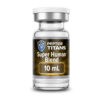
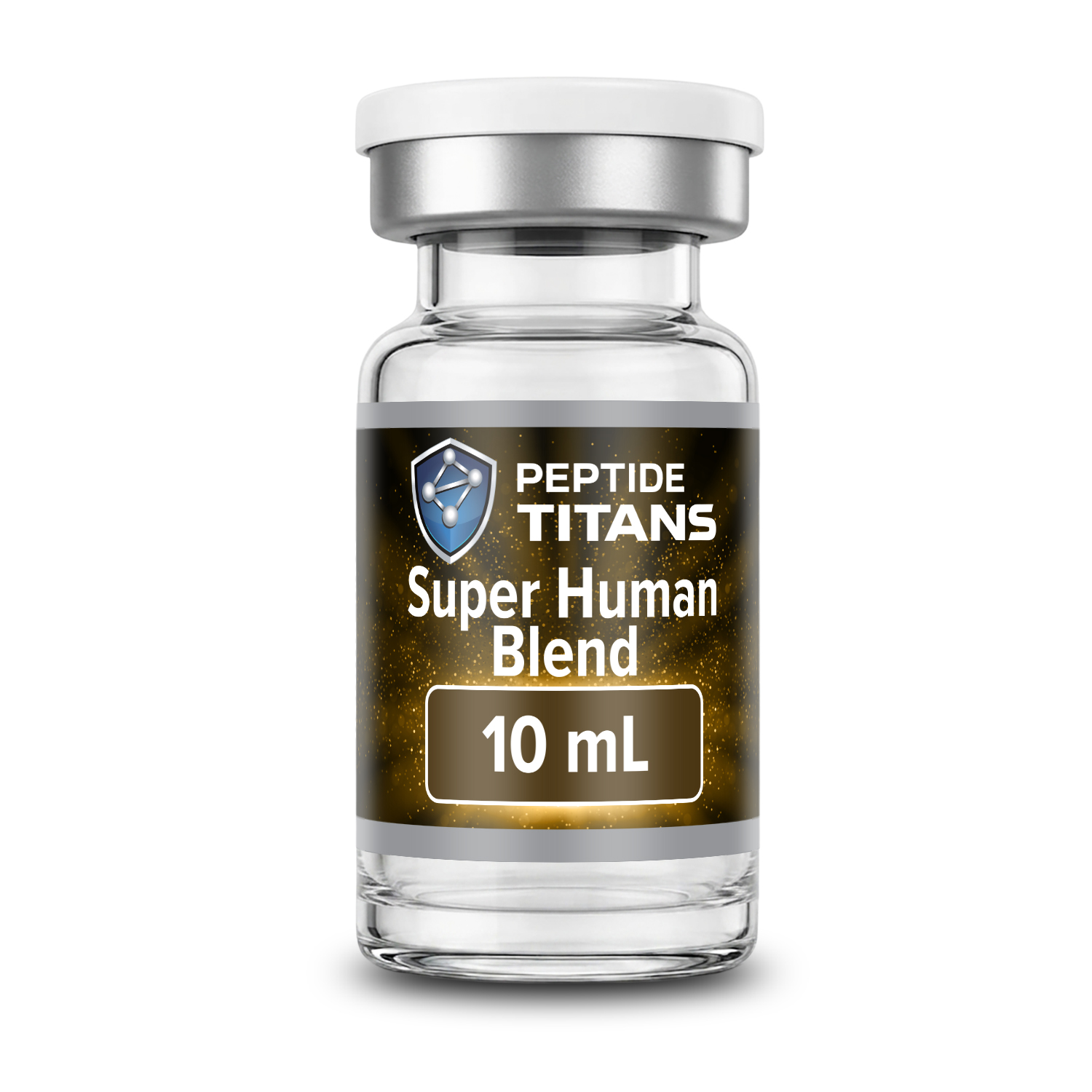
Super Human Blend is a composite preparation of nine free amino acids and amino acid derivatives rather than a single peptide. Its constituents fall into several functional groups: the urea-cycle and nitric oxide precursors (L-Arginine, L-Ornithine, L-Citrulline), the structural and connective tissue substrates (L-Lysine, L-Proline, L-Glutamine), the mitochondrial and osmoregulatory components (L-Carnitine, L-Taurine), and the sulfur-donor antioxidant precursor N-Acetylcysteine. Because the formulation contains multiple distinct small molecules, overall molecular formula and molecular weight are inherently variable and depend on blend ratios and hydration state.
Research Applications
Nitric Oxide and Vascular Signalling Research
The arginine–ornithine–citrulline component of this blend makes it a frequent subject of nitric oxide pathway research. Laboratory investigations focus on its role in:
- Nitric Oxide Synthase Activity: Evaluation of substrate availability and eNOS pathway output
- Citrulline–Arginine Recycling: Analysis of the endogenous conversion pathway that sustains arginine pools
- Endothelial Function Models: Examination of vasodilatory signalling in endothelial cell culture
- Urea Cycle Flux: Investigation of ornithine handling and downstream polyamine synthesis
Experimental protocols commonly utilise endothelial cell culture systems and isolated vessel preparations to quantify nitric oxide production under controlled substrate conditions.
Growth Hormone Secretagogue Pathway Research
Several constituents of this blend have been studied for their influence on pituitary signalling. Laboratory investigations focus on their role in:
- Somatotroph Response: Analysis of growth hormone release from pituitary cell preparations
- Somatostatin Interaction: Examination of inhibitory tone and its modulation by amino acid load
- IGF-1 Signalling: Study of downstream insulin-like growth factor expression
- Comparative Substrate Studies: Evaluation of arginine, ornithine, and lysine as individual versus combined inputs
These studies typically employ pituitary cell culture and perfusion systems, allowing secretion kinetics to be measured against defined amino acid concentrations.
Mitochondrial Transport and Energy Metabolism Research
L-Carnitine and L-Taurine give this blend a defined mitochondrial research dimension. Laboratory investigations focus on their role in:
- Fatty Acid Translocation: Measurement of long-chain fatty acid transport across the inner mitochondrial membrane
- Beta-Oxidation Flux: Analysis of substrate oxidation rates in isolated mitochondria
- Osmoregulation: Examination of taurine’s role in cell volume and membrane stability
- Respiratory Chain Function: Investigation of oxygen consumption and coupling efficiency
Seahorse extracellular flux analysis and isolated mitochondrial preparations are commonly applied to characterise these endpoints.
Antioxidant and Glutathione Precursor Research
N-Acetylcysteine and L-Glutamine position this blend within redox biology research. Laboratory investigations focus on their role in:
- Glutathione Synthesis: Measurement of intracellular glutathione pools following cysteine donor supply
- Oxidative Stress Response: Analysis of reactive oxygen species handling under challenge conditions
- Collagen Substrate Supply: Study of proline and lysine availability for structural protein synthesis
- Cellular Resilience: Investigation of viability in models of metabolic and oxidative stress
Protocols frequently combine fluorometric redox assays with viability measurement to distinguish antioxidant capacity from general nutrient effects.
Laboratory Handling and Storage Protocols
Lyophilized Powder Storage
- Store at –20°C to –80°C in the original, sealed vial
- Protect from light exposure and moisture
- A desiccated storage environment is recommended
- Stability data suggests extended stability when stored at −20 °C or below.
Reconstituted Solution Storage
- Short-term storage: Up to 7 days at 4°C
- Long-term storage: Store at –20°C in aliquots
- Use single-use aliquots to preserve blend integrity
- Minimize freeze–thaw cycles; single-use aliquots are strongly recommended
Stability Characteristics
Super Human Blend is a multi-component amino acid research formulation. Free amino acids are generally more robust than peptides, but the N-Acetylcysteine fraction is oxidation-sensitive and benefits from protection against prolonged air and light exposure once the vial is opened or reconstituted. As a composite preparation, stability depends on proper cold storage of the lyophilized material, careful reconstitution, and minimized freeze–thaw exposure. When handled according to standard laboratory protocols, the blend maintains solubility and compositional consistency suitable for in vitro and analytical research applications.
Frequently Asked Questions
What is Super Human Blend?
Super Human Blend is a multi-component research formulation supplying nine amino acids and amino acid derivatives in a single lyophilized vial, totalling 865 mg of content. It is not a peptide: the vial contains free amino acids and derivatives rather than a chained amino acid sequence.
What does each vial contain?
Each vial supplies:
-
L-Arginine 110 mg, L-Ornithine 110 mg, L-Citrulline 120 mg
-
L-Lysine 70 mg, L-Glutamine 40 mg, L-Proline 60 mg
-
L-Taurine 60 mg, L-Carnitine 220 mg
-
N-Acetylcysteine (NAC) 75 mg
This gives a total content of 865 mg per vial.
What is this blend commonly researched for?
Research on formulations of this type centres on nitric oxide synthesis and endothelial signalling, growth hormone secretagogue pathways, mitochondrial fatty acid transport and energy metabolism, and glutathione-dependent antioxidant capacity.
Why combine these particular amino acids?
The constituents cluster into complementary groups rather than acting on a single pathway. Arginine, ornithine, and citrulline participate in the urea cycle and nitric oxide production; lysine, proline, and glutamine supply structural and connective tissue substrates; carnitine and taurine relate to mitochondrial transport and osmoregulation; and N-Acetylcysteine serves as a cysteine donor for glutathione synthesis. Supplying them in a fixed ratio allows the combination to be evaluated under controlled conditions.
Is this a peptide?
No. This is a multi-component amino acid blend, not a peptide. Its constituents are individual free amino acids and derivatives, so the formulation has no single CAS number, molecular formula, molecular weight, or amino acid sequence. Analytical characterisation is performed per component.
How is Super Human Blend supplied?
The blend is supplied as a lyophilized powder in a sealed vial containing 865 mg of total content. Vials ship without diluent; reconstitution with bacteriostatic water, sterile water, or PBS is performed by the receiving laboratory according to its own protocols.
How should unreconstituted vials be stored?
Store sealed vials at –20°C to –80°C in a desiccated environment, protected from light and moisture. The N-Acetylcysteine fraction in particular benefits from minimal air exposure, so vials should be kept sealed until use.
How should reconstituted solutions be handled and stored?
After reconstitution, store at 4°C for short-term use of up to seven days, or divide into single-use aliquots and store at –20°C for longer periods. Repeated freeze–thaw cycles should be avoided, as they degrade multi-component preparations faster than single-component solutions.
Does this blend require a Certificate of Analysis (COA)?
Yes. Each production lot is analysed by an independent third-party laboratory to verify identity and purity of the constituents. A lot-specific COA is generated for every batch and is available for the exact lot supplied.
Is Super Human Blend FDA-approved?
No. This blend is not approved by the FDA or any comparable regulatory authority for human or veterinary use. It is sold strictly for research and educational purposes and is not intended to diagnose, treat, cure, or prevent any disease.
This product is not for human consumption. It is sold strictly for research and educational purposes and is not intended to diagnose, treat, cure, or prevent any disease.
Any clinical data or research information referenced on this page is derived from peer-reviewed scientific literature and official publications. This information is provided for educational reference only and does not constitute medical advice or product claims.
By purchasing this product, you acknowledge that you are a qualified researcher and agree to use it in full compliance with all applicable laws and regulations.