Molecular Characteristics
Complete Specifications
Structural Composition
Met-Glu-His-Phe-Pro-Gly-Pro
Physical Properties
Semax is a synthetic heptapeptide derived from the ACTH(4–10) fragment sequence. Its short linear structure supports efficient aqueous solubility and laboratory handling. As a small peptide, it remains susceptible to enzymatic degradation in biological systems; therefore, lyophilized storage under cold, dry conditions is recommended. Protection from moisture, light exposure, and repeated freeze–thaw cycles helps preserve structural integrity and maintain analytical consistency during research applications.
Analysis & Documentation
Identity
Each production lot is checked against the reference structure recorded for this compound:
- Classification — Synthetic heptapeptide (ACTH(4–10) analog)
- Molecular formula — C₃₇H₅₁N₉O₁₀
- Expected mass — ~813.86 Da
- CAS registry — 80714-61-0
- Chain length — 7 amino acids
- PubChem CID — Not available
Analytical Methods
Testing is carried out per lot by an independent laboratory. The methods measure what the material is and how much of it is the target compound:
- RP-HPLC — reverse-phase separation of the target from process-related impurities; purity is reported as area percent of the main peak
- Mass spectrometry — observed mass compared against the expected molecular mass above
- Retention time — compared against a reference standard run under the same conditions
- Chromatogram — reproduced on the certificate so the peak and any shoulders can be inspected directly
Material & Documentation
What arrives, and how to tie it back to its paperwork:
- Appearance as supplied — White to off-white lyophilized powder
- Solubility — Water, buffered aqueous solutions (e.g., PBS)
- Lot number — printed on the container label and used to look up the certificate
- Certificate — indexed by lot at Certificates of Analysis
Laboratory Handling and Storage Protocols
Lyophilized Powder Storage
- Store at –20°C to –80°C in the original, sealed vial
- Protect from light exposure and moisture
- A desiccated storage environment is recommended
- Stability data suggests extended stability when stored at −20 °C or below.
Reconstituted Solution Storage
- Short-term storage: Up to 7 days at 4°C
- Long-term storage: Store at –20°C in aliquots
- Use single-use aliquots to preserve peptide integrity
- Minimize freeze–thaw cycles; single-use aliquots are strongly recommended
Stability Characteristics
Semax is a synthetic peptide research compound that demonstrates stable handling characteristics when managed according to standard peptide laboratory protocols. Proper cold storage of the lyophilized material, careful reconstitution, protection from light, and minimized freeze–thaw exposure help maintain structural integrity and solubility. When handled appropriately, Semax supports consistent use in in vitro and analytical research applications.
Frequently Asked Questions
What is Semax?
Semax is a synthetic heptapeptide derived from an ACTH fragment. It is used in research to investigate neurotrophic factor signaling and neurotransmitter pathway interactions.
Is Semax naturally occurring?
No. While derived from a naturally occurring ACTH fragment, Semax itself is a synthetically engineered peptide and does not occur naturally in this exact form.
How does Semax differ from Selank?
Semax and Selank are structurally distinct peptides studied in neuropeptide research. Semax is more commonly investigated for neurotrophic and monoaminergic pathway interactions, while Selank is often studied for GABAergic and immune-related signaling models.
How does Semax differ from N-Acetyl Semax?
N-Acetyl Semax includes an N-terminal acetyl modification, which may enhance stability and resistance to enzymatic degradation in research environments. The core peptide sequence remains related.
How is Semax supplied?
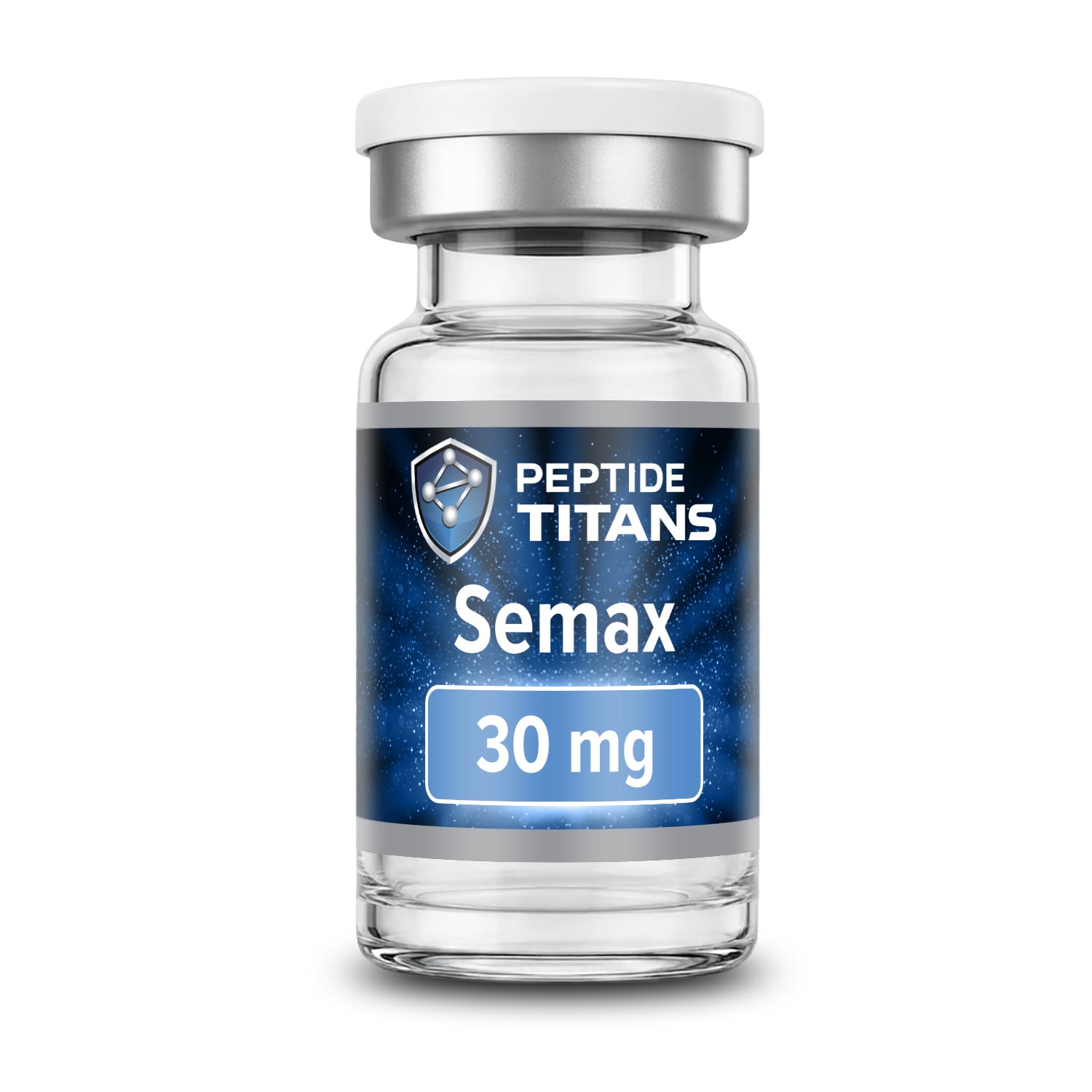
Semax is typically supplied as a lyophilized (freeze-dried) powder in sealed research vials to preserve stability during storage and shipment.
How should unreconstituted Semax be stored?
Lyophilized Semax should be stored:
-
Long-term: −20 °C to −80 °C
-
Short-term: 2–8 °C
Keep vials sealed and protected from light and moisture until use.
How should reconstituted Semax be handled and stored?
Once reconstituted:
-
Store at 2–8 °C for short-term laboratory use
-
For extended storage, aliquot and freeze at −20 °C or below
-
Minimize freeze–thaw cycles using single-use aliquots
-
Gently swirl to mix; avoid vigorous agitation
Does Semax require a Certificate of Analysis (COA)?
Yes. A Certificate of Analysis (COA) should be available for each batch of Semax, verifying identity, purity, and analytical testing results to ensure research quality and traceability.
Is Semax FDA-approved?
Research-grade Semax is not FDA-approved as a drug, supplement, or therapeutic product. It is sold exclusively as a research compound and must not be marketed or used for diagnostic, therapeutic, or consumption purposes.
Research Background
For a referenced overview of what the published research on this compound examines — and why it carries no corticotropic activity despite its ACTH origin — see What Is Semax? Research Background and Study Areas. It cites peer-reviewed sources and contains no dosing guidance.
This product is not for human consumption. It is sold strictly for research and educational purposes and is not intended to diagnose, treat, cure, or prevent any disease.
Any clinical data or research information referenced on this page is derived from peer-reviewed scientific literature and official publications. This information is provided for educational reference only and does not constitute medical advice or product claims.
By purchasing this product, you acknowledge that you are a qualified researcher and agree to use it in full compliance with all applicable laws and regulations.