
Molecular Characteristics
Complete Specifications
Structural Composition
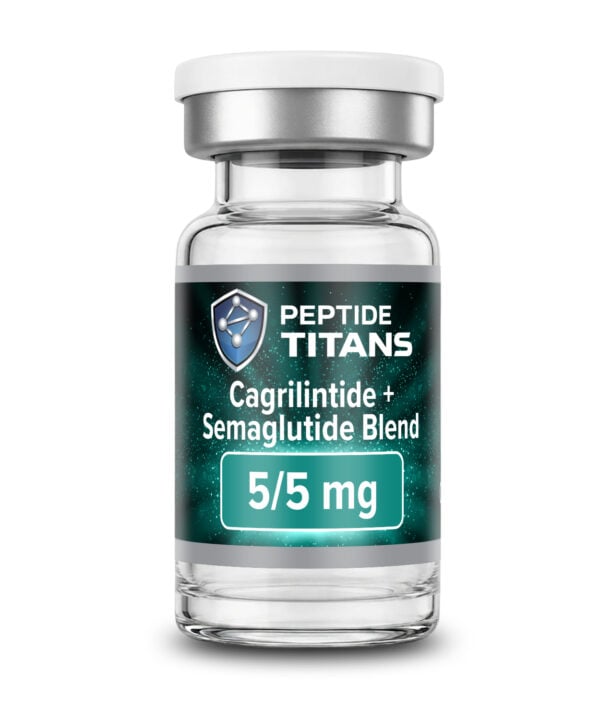
GLP-2(T) (synthetic dual-receptor agonist peptide, GLP-1 / GIP) + GLP-3(R) (synthetic triple-receptor agonist peptide, GLP-1 / GIP / glucagon)
Physical Properties
This blend combines GLP-2(T), a synthetic peptide studied as a dual agonist at the GLP-1 and GIP receptors, with GLP-3(R), a synthetic peptide studied as a triple agonist adding glucagon receptor activity to the same incretin pair. Because the formulation contains two structurally distinct engineered peptides, overall molecular formula and molecular weight are inherently variable and depend on blend ratios and hydration state. Lyophilized presentation supports storage stability, while protection from moisture, light, and repeated freeze–thaw cycles helps maintain structural integrity and analytical consistency for laboratory and research applications.
Research Applications
Incretin Receptor Signalling Research
This blend presents overlapping and divergent receptor coverage in a single preparation, making it a subject of comparative receptor pharmacology. Laboratory investigations focus on its role in:
- Receptor Occupancy Studies: Evaluation of binding at GLP-1, GIP, and glucagon receptor subtypes
- cAMP Pathway Activation: Analysis of downstream second messenger response in transfected cell lines
- Biased Signalling: Examination of G-protein versus beta-arrestin recruitment profiles
- Receptor Desensitisation: Investigation of internalisation and resensitisation kinetics under sustained exposure
Experimental protocols commonly utilise receptor-transfected cell lines and functional cAMP accumulation assays to separate the contribution of each receptor arm.
Glucose Homeostasis and Insulin Secretion Research
Incretin research centres on glucose-dependent secretory behaviour, and this pairing is studied for its combined effect. Laboratory investigations focus on its role in:
- Glucose-Stimulated Insulin Secretion: Measurement of insulin release from isolated islet preparations
- Beta Cell Function: Analysis of secretory capacity and cellular viability markers
- Glucagon Counter-Regulation: Examination of alpha cell response under varying glucose conditions
- Insulin Sensitivity Models: Investigation of peripheral glucose uptake in cell and tissue systems
Isolated pancreatic islet perfusion and glucose clamp models are commonly applied to characterise these endpoints.
Appetite and Energy Balance Research
Both components are studied for central and peripheral effects on intake regulation. Laboratory investigations focus on their role in:
- Hypothalamic Signalling: Analysis of arcuate nucleus activation and neuropeptide expression
- Gastric Emptying: Examination of gastrointestinal transit rate in controlled models
- Satiety Pathways: Study of vagal afferent signalling and central integration
- Food Intake Models: Evaluation of intake and body composition endpoints in rodent studies
These studies typically combine behavioural intake measurement with immunohistochemical mapping of central activation patterns.
Lipid Metabolism and Energy Expenditure Research
The glucagon receptor arm contributed by GLP-3(R) adds an energy expenditure dimension not present with dual agonism alone. Laboratory investigations focus on its role in:
- Hepatic Lipid Handling: Measurement of triglyceride content and lipogenic gene expression
- Adipose Tissue Remodelling: Analysis of lipolysis rate and adipocyte phenotype
- Thermogenic Activity: Examination of brown adipose markers and mitochondrial uncoupling
- Comparative Agonism: Investigation of dual versus triple receptor coverage on metabolic rate
Indirect calorimetry, hepatic tissue analysis, and adipocyte culture systems are commonly applied in this line of work.
Laboratory Handling and Storage Protocols
Lyophilized Powder Storage
- Store at –20°C to –80°C in the original, sealed vial
- Protect from light exposure and moisture
- A desiccated storage environment is recommended
- Stability data suggests extended stability when stored at −20 °C or below.
Reconstituted Solution Storage
- Short-term storage: Up to 7 days at 4°C
- Long-term storage: Store at –20°C in aliquots
- Use single-use aliquots to preserve peptide integrity
- Minimize freeze–thaw cycles; single-use aliquots are strongly recommended
Stability Characteristics
GLP-2(T) + GLP-3(R) Blend is a synthetic multi-component peptide research formulation. Both components are engineered peptides carrying modifications intended to extend their half-life, which contributes to reasonable handling stability, but as a composite preparation stability still depends on proper cold storage of the lyophilized material, careful reconstitution, and minimized freeze–thaw exposure. Agitation and foaming during reconstitution should be avoided. When handled according to standard peptide laboratory protocols, the blend maintains structural integrity and solubility suitable for in vitro and analytical research applications.
Frequently Asked Questions
What is the GLP-2(T) + GLP-3(R) blend?
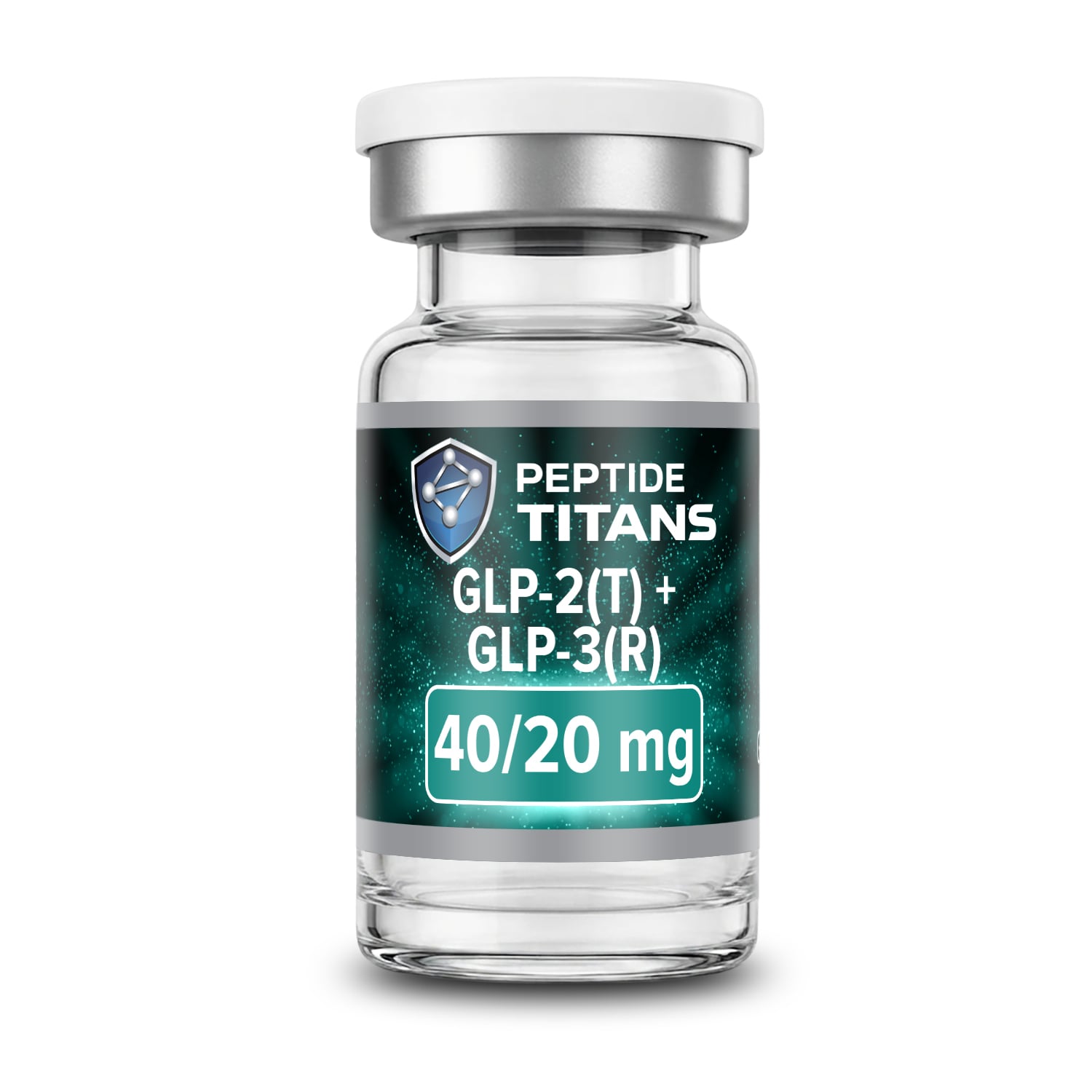
It is a dual-compound research formulation supplying GLP-2(T) and GLP-3(R) together in a single lyophilized vial, at 40 mg and 20 mg respectively. GLP-2(T) is studied as a dual agonist at the GLP-1 and GIP receptors; GLP-3(R) is studied as a triple agonist adding glucagon receptor activity.
What is this blend commonly researched for?
Research on this pairing centres on incretin and metabolic signalling. Common areas include:
-
Receptor pharmacology across GLP-1, GIP, and glucagon receptor subtypes
-
Glucose-dependent insulin secretion and beta cell function
-
Appetite regulation, gastric emptying, and central satiety pathways
-
Hepatic lipid handling, adipose remodelling, and energy expenditure
Why combine GLP-2(T) and GLP-3(R)?
The two compounds share the GLP-1 and GIP receptor arms but differ in glucagon receptor coverage. Supplying them together at a fixed 2:1 ratio allows researchers to study the effect of layering triple-receptor activity onto a dual-receptor background under controlled conditions, rather than reconstituting and combining two vials separately.
Is this a single peptide?
No. This is a multi-peptide blend, not a single amino acid sequence. The vial contains two structurally distinct engineered peptides, so it has no single CAS number, molecular formula, or molecular weight. Analytical characterisation is performed per component.
How is the GLP-2(T) + GLP-3(R) blend supplied?
The blend is supplied as a lyophilized powder in a sealed vial containing 40 mg of GLP-2(T) and 20 mg of GLP-3(R), for 60 mg of total peptide content. Vials ship without diluent; reconstitution with bacteriostatic water, sterile water, or PBS is performed by the receiving laboratory.
How should unreconstituted blend vials be stored?
Store sealed vials at –20°C to –80°C in a desiccated environment, protected from light and moisture. Under these conditions the lyophilized material is stable for extended periods. Avoid leaving vials at room temperature longer than handling requires.
How should reconstituted blend solutions be handled and stored?
After reconstitution, store at 4°C for short-term use of up to seven days, or divide into single-use aliquots and store at –20°C for longer periods. Swirl rather than shake when mixing, and avoid repeated freeze–thaw cycles, which degrade multi-component preparations faster than single-peptide solutions.
Does this blend require a Certificate of Analysis (COA)?
Yes. Each production lot is analysed by an independent third-party laboratory, with HPLC used to verify purity of ≥99% and mass spectrometry used to confirm the identity of both components. A lot-specific COA is generated for every batch and is available for the exact lot supplied.
Is the GLP-2(T) + GLP-3(R) blend FDA-approved?
No. This blend is not approved by the FDA or any comparable regulatory authority for human or veterinary use. It is sold strictly for research and educational purposes and is not intended to diagnose, treat, cure, or prevent any disease.
This product is not for human consumption. It is sold strictly for research and educational purposes and is not intended to diagnose, treat, cure, or prevent any disease.
Any clinical data or research information referenced on this page is derived from peer-reviewed scientific literature and official publications. This information is provided for educational reference only and does not constitute medical advice or product claims.
By purchasing this product, you acknowledge that you are a qualified researcher and agree to use it in full compliance with all applicable laws and regulations.