Molecular Characteristics
Complete Specifications
Structural Composition
Physical Properties
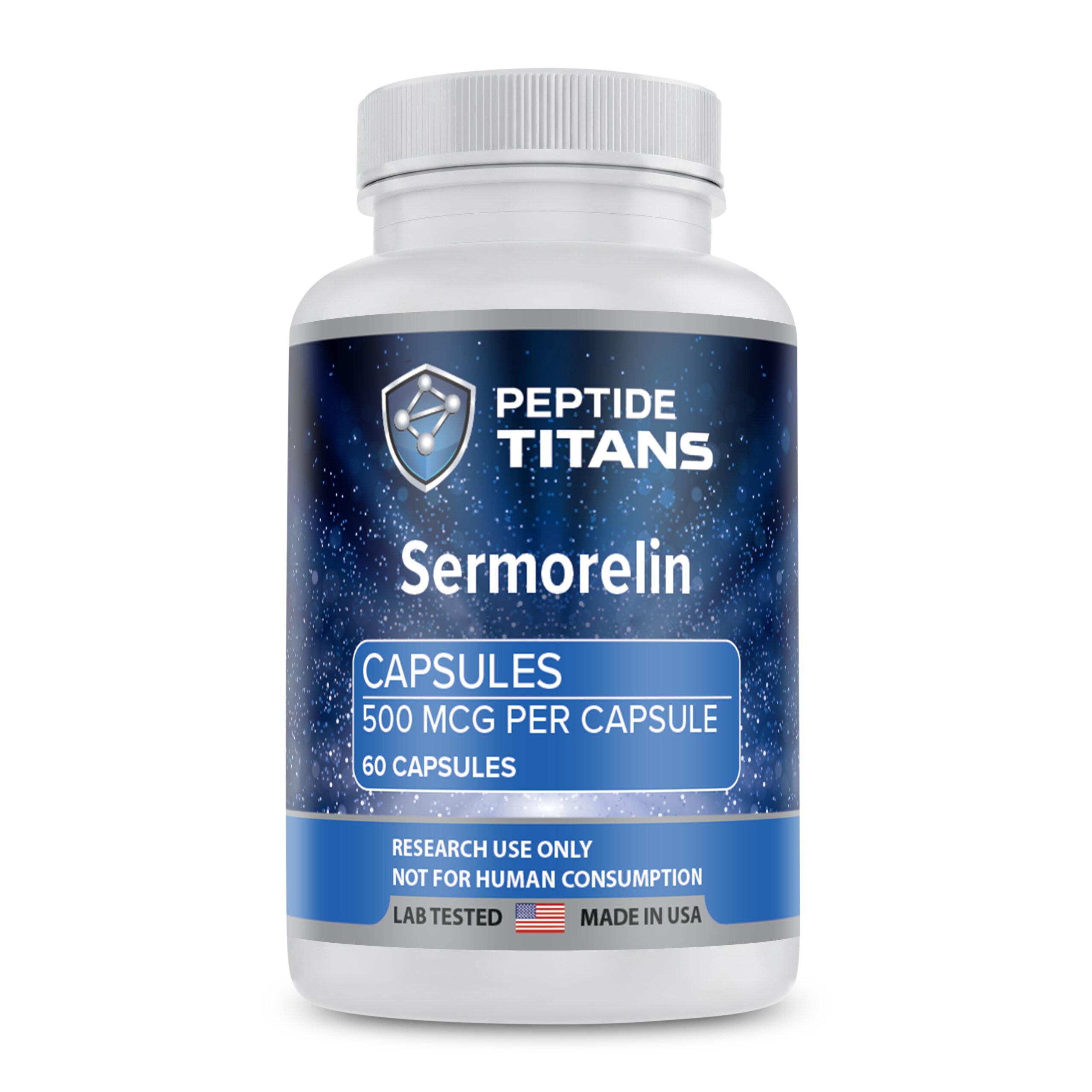
Sermorelin is a synthetic 29-amino-acid peptide with an amidated C-terminus, supplied here in capsule form.
Analysis & Documentation
Identity
Each production lot is checked against the reference structure recorded for this compound:
- Classification — Synthetic 29-amino-acid GHRH analog
- Molecular formula — C₁₄₉H₂₄₆N₄₄O₄₂S
- Expected mass — ~3,357.9 Da
- CAS registry — 86168-78-7
- Chain length — 29 amino acids
- PubChem CID — Not listed
Analytical Methods
Testing is carried out per lot by an independent laboratory. The methods measure what the material is and how much of it is the target compound:
- RP-HPLC — reverse-phase separation of the target from process-related impurities; purity is reported as area percent of the main peak
- Mass spectrometry — observed mass compared against the expected molecular mass above
- Retention time — compared against a reference standard run under the same conditions
- Chromatogram — reproduced on the certificate so the peak and any shoulders can be inspected directly
Material & Documentation
What arrives, and how to tie it back to its paperwork:
- Appearance as supplied — Solid capsule (research-grade sermorelin)
- Lot number — printed on the container label and used to look up the certificate
- Certificate — indexed by lot at Certificates of Analysis
Storage & Handling Guidelines
Capsule Storage
- Store in a cool, dry place at room temperature (15–25°C)
- Keep in the original sealed container, away from light and moisture
- Retain any desiccant packet included in the bottle
- Keep the container tightly closed between uses
Handling Guidelines
- Handle capsules with clean, dry hands
- Keep away from heat and out of reach of children
Shelf Life & Stability
- Stable at room temperature when stored as directed
- Avoid excessive heat, humidity, and direct sunlight
- Reseal the container promptly after each use
- Use before the labeled expiration date
Sermorelin is a GHRH-analog peptide. Store capsules sealed at room temperature and protect from heat, humidity and light to maintain integrity for research use.
Frequently Asked Questions
What is Sermorelin?
Is Sermorelin approved for human use?
How are the Sermorelin capsules supplied?
Do the Sermorelin capsules need to be reconstituted?
How should the Sermorelin capsules be stored?
What quality standards are applied to Sermorelin products?
Research Background
For a referenced overview of the published research and this compound’s unusual regulatory history, see What Is Sermorelin? Research Background and Study Areas. It cites peer-reviewed sources and contains no dosing guidance.
This product is not for human consumption. It is sold strictly for research and educational purposes and is not intended to diagnose, treat, cure, or prevent any disease.
Any clinical data or research information referenced on this page is derived from peer-reviewed scientific literature and official publications. This information is provided for educational reference only and does not constitute medical advice or product claims.
By purchasing this product, you acknowledge that you are a qualified researcher and agree to use it in full compliance with all applicable laws and regulations.