

Thymalin is a polypeptide preparation derived from thymus tissue that has appeared in experimental and observational scientific literature. Published studies and reviews describe short peptide fractions (often abbreviated by amino-acid residues such as EW, KE, and EDP) as the primary bioactive components under investigation. This article synthesizes how thymalin has been presented in the peer-reviewed literature, summarizes major research themes and model types, explains common study terminology, and outlines key limitations of the current evidence base. All content is research-focused and intended for laboratory and academic audiences.
What is thymalin?
In published literature, thymalin refers to a complex mixture derived from thymus tissue that contains short peptides alongside other polypeptide fragments. Researchers frequently highlight specific short sequences (for example, di- and tri-peptides annotated by their single-letter amino-acid codes) when discussing mechanistic hypotheses. Reviews emphasize that thymalin is best characterized as a thymus-derived peptide preparation rather than a single, well-defined molecular entity (PMC8365293).
How thymalin appears in the research literature
Published literature on thymalin spans cell-culture experiments, animal studies, and some observational clinical reports. Review articles compile this body of work and note that much mechanistic interpretation is based on preclinical findings. Several authors propose that short thymic peptides exert transcriptional or chromatin-level effects rather than acting exclusively via classical single-receptor pathways (PMC8654498, PMC8365293).
Major study areas and model types
1. Cellular and molecular studies
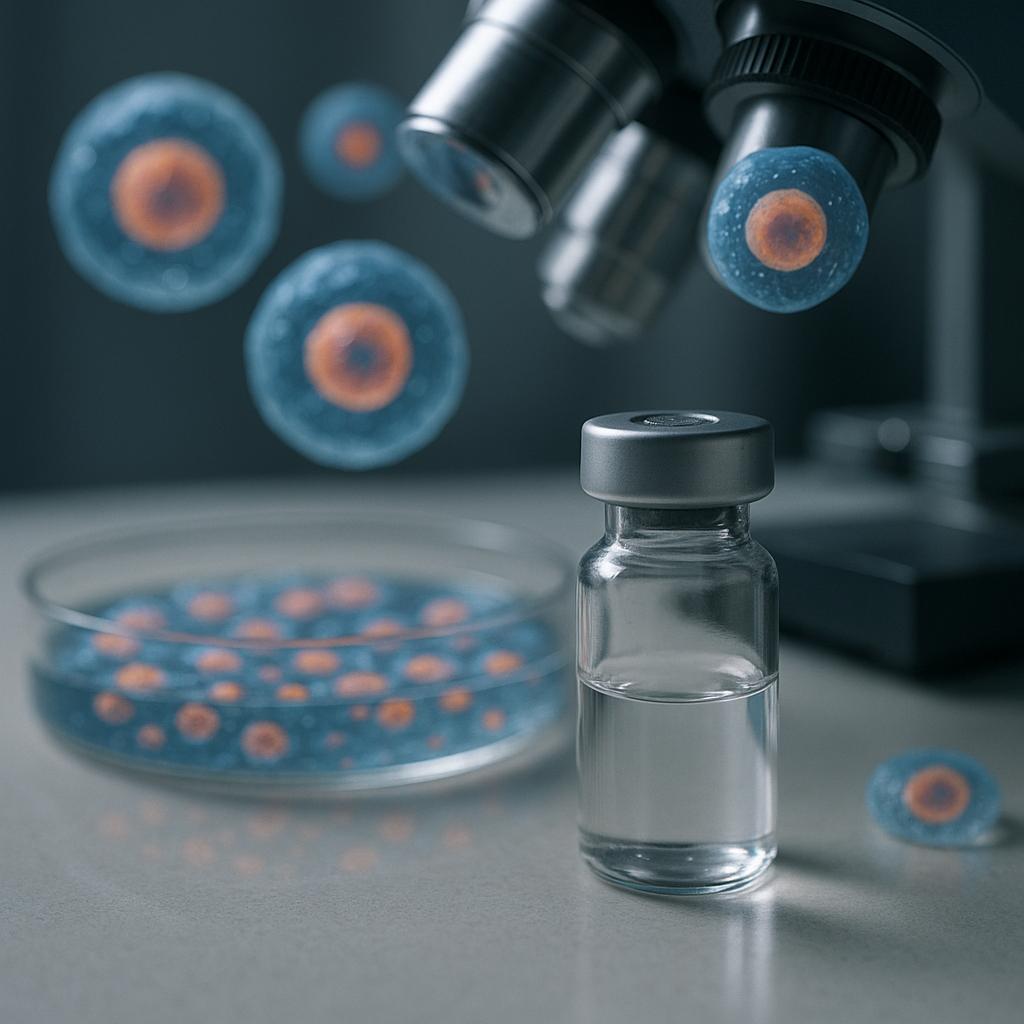
Laboratory research has examined how thymalin fractions interact with cultured cells, including hematopoietic progenitors and immune-lineage cells. In vitro work has measured changes in cell-surface phenotype markers, shifts in differentiation-associated markers, and alterations in the expression of cytokine- and stress-related genes. One in vitro study assessed marker profiles of human hematopoietic cells following exposure to thymalin fractions, reporting changes in markers such as CD44, CD117, and CD28 within the experimental system (PMID: 33237528).
2. Animal (preclinical) models
Animal studies cited in reviews explore effects on lymphoid tissues, hematopoiesis, and related parameters. These preclinical models provide data about cellular proliferation, apoptosis, and gene-expression patterns in tissues of interest. Authors of synthesis articles emphasize that animal experiments have informed hypotheses about transcriptional regulation and hematopoietic modulation, but they also flag translational gaps between animal data and human-context interpretation (PMC8365293).
3. Observational and clinical-context reports
Some publications compile observational data or clinical-context reports, particularly within periods of heightened research interest, such as the COVID-19 pandemic era. These works typically present descriptive findings and reiterate the need for controlled mechanistic studies to clarify molecular pathways and link preclinical signals to clinical endpoints (PMC8654498).
Mechanisms and pathways investigators examine
Researchers have proposed several mechanistic themes for thymalin and its short-peptide components. Prominent hypotheses in the literature include:
- Chromatin and transcriptional modulation: Interactions between short peptides and nuclear components (DNA, histones) that could influence transcriptional accessibility and gene-expression patterns (PMC8365293).
- Regulation of stress-response and heat-shock proteins: Altered expression of heat-shock proteins and stress-related genes observed in cell models exposed to thymic peptides.
- Modulation of hematopoietic marker expression: Shifts in surface markers on hematopoietic progenitors consistent with differentiation-related changes in laboratory systems (PMID: 33237528).
- Innate immune cell signaling: Studies of other thymus-derived peptides have documented effects on intracellular signaling cascades (for example, NF-κB and SAPK/JNK) in macrophage-like cell lines, illustrating a broader mechanistic landscape for thymic peptides (PMID: 22148922).
Key terms readers may encounter
Familiarity with certain terms helps interpretation of primary literature:
- Short peptides: Di- and tri-peptide sequences often denoted by one-letter amino-acid codes (e.g., EW, KE, EDP).
- Hematopoiesis: The process of blood-cell formation; frequently evaluated in cell- and animal-based thymalin studies.
- Chromatin interaction: Descriptions of peptide binding or association with DNA/histones and resulting transcriptional effects.
- Preclinical models: Laboratory and animal models used to generate mechanistic and exploratory data prior to controlled translational work.
Limitations and open questions in the literature
Authors of recent reviews and primary studies consistently note several limitations that frame current understanding:
- Dominance of preclinical data: Much mechanistic evidence is derived from in vitro and animal experiments; direct translational links require additional controlled research (PMC8365293).
- Mechanistic heterogeneity: Proposed actions range from chromatin-level interactions to signaling-pathway modulation, and these hypotheses are not yet unified by a single, fully validated molecular mechanism.
- Variability in preparations: Thymus-derived peptide preparations may differ between studies, complicating cross-study comparisons and meta-interpretation.
- Need for targeted mechanistic studies: Authors call for experiments that directly test peptide–chromatin interactions, identify molecular binding partners, and map downstream transcriptional programs.
Why research-only language matters
Maintaining research-only framing preserves scientific integrity and regulatory clarity. Published literature on thymalin emphasizes mechanistic hypotheses and exploratory findings; it does not establish definitive clinical outcomes. Describing the evidence as preclinical, observational, or hypothesis-generating aligns with how authors present their own conclusions and highlights where further controlled research is needed.
Summary and further reading
In sum, thymalin appears in the literature as a thymus-derived polypeptide complex whose short-peptide fractions have been studied in cell and animal systems. Researchers have investigated chromatin-related interactions, changes in gene-expression patterns, hematopoietic marker modulation, and impacts on intracellular signaling networks. The evidence base is principally preclinical, with review articles and primary studies calling for additional mechanistic and translational research.
Selected sources for deeper review are provided below in the Sources section.
Sources
- Kudryashova et al., Review of Thymalin mechanisms (PMC8365293)
- Review discussing thymic peptides during immune-dysregulation contexts (PMC8654498)
- In vitro study on hematopoietic marker changes (PMID: 33237528)
- Study on thymic peptides and innate immune-cell signaling (PMID: 22148922)
Related Peptide Titans Resources
Research Sources
Primary references and source materials used for this research-focused overview:
- pmc.ncbi.nlm.nih.gov/articles/PMC8365293
- pmc.ncbi.nlm.nih.gov/articles/PMC8654498
- pubmed.ncbi.nlm.nih.gov/33237528
- pubmed.ncbi.nlm.nih.gov/22148922
Frequently Asked Questions
What is thymalin in scientific terms?
Thymalin is described in the literature as a thymus-derived polypeptide preparation containing short peptides; researchers often focus on specific di- and tri-peptide fractions when investigating mechanisms.
What have researchers studied about thymalin?
Published work has explored cellular and animal models assessing marker-expression changes, gene-expression modulation, chromatin interactions, and intracellular signaling pathways. Reviews emphasize that much evidence is preclinical and hypothesis-generating.
Are the mechanisms of thymalin fully defined?
No. Current literature proposes several mechanistic themes—chromatin interaction, transcriptional modulation, and signaling effects—but authors note that unified, experimentally confirmed molecular mechanisms remain to be established.
Where can I find primary sources on thymalin research?
Peer-reviewed reviews and primary studies are available via PubMed and PubMed Central; representative links include the reviews and laboratory papers cited at the end of this article.