Molecular Characteristics
Complete Specifications
Structural Composition
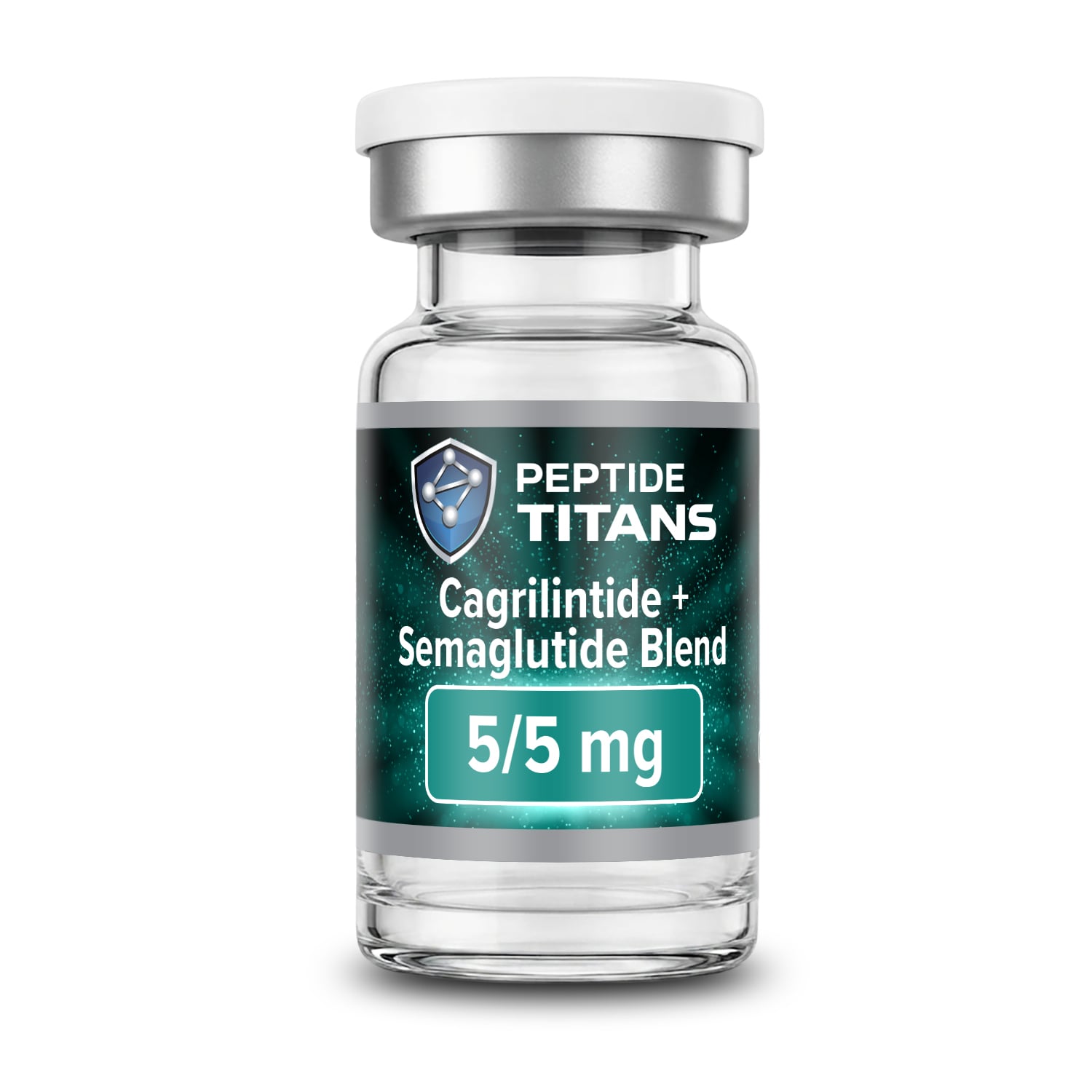
Cagrilintide (long-acting amylin analog) + GLP-1 (GLP-1 receptor agonist analog)
Physical Properties
This blend combines Cagrilintide, a long-acting amylin receptor agonist analog, with GLP-1, a GLP-1 receptor agonist analog. Because the formulation contains two structurally distinct modified peptides, overall molecular formula and molecular weight are inherently variable and depend on blend ratios and hydration state. Lyophilized presentation supports storage stability, while protection from moisture, light, and repeated freeze–thaw cycles helps maintain structural integrity and analytical consistency for laboratory and research applications.
Research Applications
Appetite Regulation and Energy Balance Research
Cagrilintide + GLP-1 Blend is utilized as a research combination in studies examining amylin receptor and glucagon-like peptide-1 (GLP-1) receptor signaling pathways associated with appetite regulation and energy balance. Laboratory investigations focus on its role in:
- GLP-1 Receptor Activation Models: Investigation of receptor binding dynamics and downstream intracellular signaling cascades
- Amylin Receptor Signaling Studies: Evaluation of calcitonin receptor complex activation and central appetite-related pathways
- Central Satiety Circuit Research: Analysis of hypothalamic signaling involved in feeding behavior modulation
- Gastric Emptying Models: Examination of gastrointestinal motility signaling mechanisms under experimental conditions
- Combined Receptor Synergy Analysis: Investigation of coordinated GLP-1 and amylin pathway interactions
Experimental protocols commonly employ receptor-binding assays, neuronal signaling models, and metabolic monitoring systems to characterize blend-mediated appetite-related responses.
Glucose and Metabolic Signaling Research
The Cagrilintide + GLP-1 Blend has been examined in research contexts involving glucose regulation and metabolic pathway modulation. Key areas of investigation include:
- Insulin Secretion Signaling Models: Evaluation of glucose-dependent endocrine response mechanisms
- Glucagon Regulation Studies: Investigation of alpha-cell signaling dynamics under receptor activation
- Glucose Uptake Pathway Research: Analysis of peripheral tissue responsiveness to altered endocrine signaling
- Lipid Metabolism Models: Research into substrate utilization and storage signaling pathways
- Metabolic Flexibility Studies: Examination of adaptive responses in energy homeostasis systems
These studies utilize metabolic profiling systems, hormone quantification assays, and cellular glucose transport models to evaluate signaling outcomes.
Neuroendocrine and Central Signaling Research
The blend has also been explored in research models examining central nervous system and neuroendocrine regulatory mechanisms, including:
- Hypothalamic Neuron Activation: Evaluation of appetite-regulating neural circuit signaling
- Second Messenger Pathway Studies: Investigation of cAMP and calcium-mediated intracellular responses
- Reward and Feeding Behavior Models: Analysis of neurochemical signaling patterns associated with nutrient intake
- Receptor Desensitization Research: Examination of responsiveness and adaptive receptor regulation mechanisms
Laboratory protocols assess neuronal activation markers, receptor sensitivity, and downstream transcriptional changes using biochemical and molecular techniques.
Cellular Signaling and Energy Homeostasis Research
Additional research applications explore the blend’s combined influence on intracellular regulatory systems involved in energy balance and endocrine homeostasis, including:
- MAPK and PI3K-AKT Pathway Studies: Investigation of intracellular cascades associated with GLP-1 and amylin receptor activation
- Gene Expression Profiling: Analysis of transcriptional responses linked to metabolic signaling modulation
- Mitochondrial Activity Models: Research into cellular energy production dynamics under altered endocrine signaling
- Integrated Endocrine Feedback Systems: Examination of coordinated hormonal regulatory networks maintaining energy equilibrium
Research in this domain focuses on understanding how the combined peptide components influence GLP-1 and amylin receptor signaling, metabolic regulation pathways, and neuroendocrine coordination under controlled experimental conditions.
Laboratory Handling and Storage Protocols
Lyophilized Powder Storage
- Store at –20°C to –80°C in the original, sealed vial
- Protect from light exposure and moisture
- A desiccated storage environment is recommended
- Stability data suggests extended stability when stored at −20 °C or below.
Reconstituted Solution Storage
- Short-term storage: Up to 7 days at 4°C
- Long-term storage: Store at –20°C in aliquots
- Use single-use aliquots to preserve peptide integrity
- Minimize freeze–thaw cycles; single-use aliquots are strongly recommended
Stability Characteristics
Cagrilintide + GLP-1 Blend is a synthetic multi-component peptide research formulation composed of long-acting modified peptides. As a composite preparation, stability depends on appropriate cold storage of the lyophilized material, protection from light, careful reconstitution, and minimized freeze–thaw exposure. When handled according to standard peptide laboratory protocols, the blend maintains structural integrity and solubility suitable for in vitro and analytical research applications.
Frequently Asked Questions
What is the Cagrilintide + GLP-1 blend?
This is a research formulation combining:
-
Cagrilintide — a long-acting amylin receptor agonist analog
-
GLP-1 — a GLP-1 receptor agonist analog
The blend allows researchers to investigate combined activation of amylin and GLP-1 receptor pathways in experimental models.
What is this blend commonly researched for?
In laboratory and preclinical models, the Cagrilintide + GLP-1 blend is studied for:
-
Metabolic pathway signaling
-
Appetite-regulation research models
-
Glucose regulation mechanisms
-
Endocrine receptor co-activation studies
-
Multi-peptide synergy investigations
All applications are exploratory and conducted in controlled research settings.
Why combine Cagrilintide and GLP-1?
Researchers may combine these peptides to evaluate:
-
Potential complementary receptor activation effects
-
Amylin and GLP-1 pathway interaction models
-
Comparative signaling versus individual peptide controls
This allows for streamlined evaluation of dual-pathway mechanisms in experimental designs.
Is this a single peptide?
No. This is a multi-peptide blend, not a single amino acid sequence. Each component retains its distinct structural and receptor-binding characteristics within the formulation.
How is the Cagrilintide + GLP-1 blend supplied?
The blend is typically supplied as a lyophilized (freeze-dried) powder in sealed research vials to maintain stability during storage and transport.
How should unreconstituted blend vials be stored?
Lyophilized blend vials should be stored:
-
Long-term: −20 °C to −80 °C
-
Short-term: 2–8 °C
Keep vials sealed and protected from light and moisture until use.
How should reconstituted blend solutions be handled and stored?
Once reconstituted:
-
Store at 2–8 °C for short-term laboratory use
-
For extended storage, aliquot and freeze at −20 °C or below
-
Minimize freeze–thaw cycles using single-use aliquots
-
Gently swirl to mix; avoid vigorous agitation
Does this blend require a Certificate of Analysis (COA)?
Yes. A Certificate of Analysis (COA) should be available for each batch, verifying identity and purity for both peptide components within the blend to ensure research quality and traceability.
Is the Cagrilintide + GLP-1 blend FDA-approved?
No. This blend is not FDA-approved as a drug, supplement, or therapeutic product. It is sold exclusively as a research compound blend and must not be marketed or used for diagnostic, therapeutic, or consumption purposes.
This product is not for human consumption. It is sold strictly for research and educational purposes and is not intended to diagnose, treat, cure, or prevent any disease.
Any clinical data or research information referenced on this page is derived from peer-reviewed scientific literature and official publications. This information is provided for educational reference only and does not constitute medical advice or product claims.
By purchasing this product, you acknowledge that you are a qualified researcher and agree to use it in full compliance with all applicable laws and regulations.