Molecular Characteristics
Complete Specifications
Structural Composition
Ala-His-Lys
Physical Properties
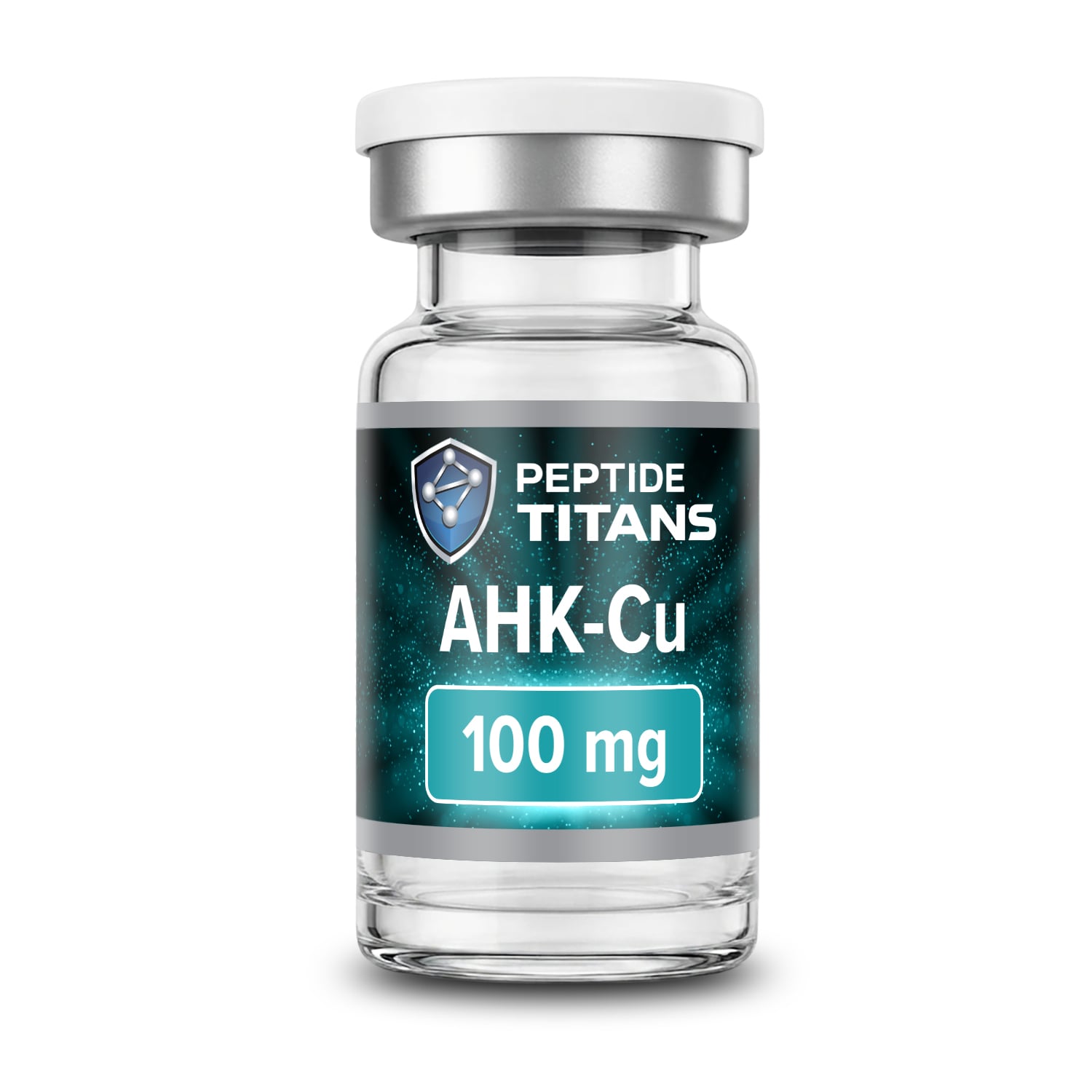
AHK-Cu is a short tripeptide, Ala-His-Lys, that forms a stable coordination complex with a copper (II) ion through its histidine imidazole and terminal amine groups. This metal-binding configuration is the defining feature of the molecule and is responsible for its characteristic blue coloration in solution. Because the copper centre is integral to the complex rather than an incidental additive, handling protocols that avoid chelating agents and strong reducing conditions help preserve the intended coordination chemistry during laboratory work.
Research Applications
Hair Follicle and Dermal Papilla Research
AHK-Cu is widely used as a research compound for studying follicular cell behaviour and the signalling environment of the hair follicle. Laboratory investigations focus on its role in:
- Dermal Papilla Cell Proliferation: Evaluation of proliferation and viability in cultured dermal papilla cell populations
- Follicular Signalling Pathways: Analysis of growth factor expression associated with follicular cycling
- Vascular Support Studies: Examination of VEGF expression and perifollicular microvascular formation
- Keratinocyte Interaction: Investigation of epithelial-mesenchymal signalling within follicular models
Experimental protocols commonly utilise in vitro dermal papilla and keratinocyte culture systems, as well as ex vivo follicle organ culture, to characterise cellular responses under controlled conditions.
Collagen and Extracellular Matrix Research
The copper tripeptide configuration has made AHK-Cu a frequent subject of matrix biology research. Laboratory investigations focus on its role in:
- Collagen Synthesis: Measurement of type I and type III collagen production in fibroblast cultures
- Matrix Remodelling: Analysis of metalloproteinase and inhibitor balance during tissue reorganisation
- Elastin and Glycosaminoglycan Deposition: Study of secondary matrix component accumulation
- Fibroblast Activity: Assessment of proliferation, migration, and secretory profile
These studies typically employ primary human dermal fibroblast cultures and three-dimensional matrix models to quantify structural protein output.
Skin Regeneration and Repair Research
AHK-Cu is examined alongside other copper peptides in models of cutaneous repair. Laboratory investigations focus on its role in:
- Wound Closure Models: Evaluation of re-epithelialisation rate in scratch and excisional assays
- Angiogenesis Studies: Examination of endothelial tube formation and vascular sprouting
- Inflammatory Signalling: Analysis of cytokine profiles during the early repair phase
- Barrier Function: Research into epidermal integrity and structural recovery
Protocols frequently combine endothelial and fibroblast co-culture systems with quantitative imaging to characterise the sequence of repair events.
Copper Homeostasis and Antioxidant Enzyme Research
As a copper-carrying peptide, AHK-Cu serves as a research tool for studying trace metal delivery and copper-dependent enzymology. Laboratory investigations focus on its role in:
- Copper Transport Modelling: Study of peptide-mediated copper availability to cultured cells
- Superoxide Dismutase Activity: Analysis of copper-dependent antioxidant enzyme function
- Lysyl Oxidase Research: Examination of copper-requiring enzymes involved in collagen cross-linking
- Oxidative Stress Response: Investigation of redox balance in copper-supplemented culture systems
Comparative studies frequently evaluate AHK-Cu alongside other copper-binding peptides to distinguish sequence-specific effects from those attributable to copper delivery alone.
Laboratory Handling and Storage Protocols
Lyophilized Powder Storage
- Store at –20°C to –80°C in the original, sealed vial
- Protect from light exposure and moisture
- A desiccated storage environment is recommended
- Stability data suggests extended stability when stored at −20 °C or below.
Reconstituted Solution Storage
- Short-term storage: Up to 7 days at 4°C
- Long-term storage: Store at –20°C in aliquots
- Use single-use aliquots to preserve peptide integrity
- Minimize freeze–thaw cycles; single-use aliquots are strongly recommended
Stability Characteristics
AHK-Cu is a metal-coordinated peptide complex, and its stability profile reflects both peptide and coordination chemistry. The lyophilized powder is stable under standard cold, desiccated storage, while reconstituted solutions are best protected from prolonged light exposure and from buffers containing strong chelating agents such as EDTA, which can compete for the copper centre. Solutions typically present a blue to blue-violet colour; noticeable loss of colour may indicate dissociation of the complex. When handled according to standard peptide laboratory protocols, AHK-Cu maintains structural integrity and solubility suitable for in vitro and analytical research applications.
Frequently Asked Questions
What is AHK-Cu?
AHK-Cu is a synthetic tripeptide composed of alanine, histidine, and lysine, coordinated to a copper (II) ion. It belongs to the same broad family of copper-binding peptides as GHK-Cu but carries a distinct amino acid sequence, and it is supplied as a lyophilized powder for laboratory research.
What is AHK-Cu used for?
In research settings, AHK-Cu is studied for its effects on dermal papilla and fibroblast cell cultures, collagen synthesis, extracellular matrix remodelling, angiogenic signalling, and copper-dependent enzyme activity. It is used strictly as a laboratory reference compound and has no approved application outside of research.
Is AHK-Cu approved for human use?
No. AHK-Cu is not approved by the FDA or any comparable regulatory authority for human or veterinary use. It is sold exclusively for research and educational purposes and is not intended to diagnose, treat, cure, or prevent any disease.
How is AHK-Cu supplied for research purposes?
AHK-Cu is supplied as a lyophilized powder in a sealed vial, available in 50 mg and 100 mg presentations. Vials are shipped without diluent; reconstitution with bacteriostatic water, sterile water, or PBS is performed by the receiving laboratory according to its own protocols.
How should AHK-Cu be stored?
Store the lyophilized powder at –20°C to –80°C in a desiccated environment, protected from light and moisture. After reconstitution, store at 4°C for short-term use of up to seven days, or at –20°C in single-use aliquots for longer periods. Avoid repeated freeze–thaw cycles and buffers containing strong chelating agents.
What quality standards are applied to AHK-Cu products?
Every production lot is tested by independent third-party laboratories using HPLC to verify a purity of ≥99%, with mass spectrometry used to confirm identity. A lot-specific Certificate of Analysis is generated for each batch and is available for the exact lot supplied.
This product is not for human consumption. It is sold strictly for research and educational purposes and is not intended to diagnose, treat, cure, or prevent any disease.
Any clinical data or research information referenced on this page is derived from peer-reviewed scientific literature and official publications. This information is provided for educational reference only and does not constitute medical advice or product claims.
By purchasing this product, you acknowledge that you are a qualified researcher and agree to use it in full compliance with all applicable laws and regulations.